Duration
3 days (highlights), 5 days (sweet spot), 7 days (full experience)
Best Time
Dec–Mar for warmest weather, Apr–May for autumn colour, Jun–Aug for solitude
Budget
$60–100/day (camping/budget) to $250–500/day (lodges + cruises)
Getting Around
Hire car or campervan (no public transport on the west coast)
Distance
~750 km loop (Launceston → Cradle Mountain → Strahan → Lake St Clair → Hobart)
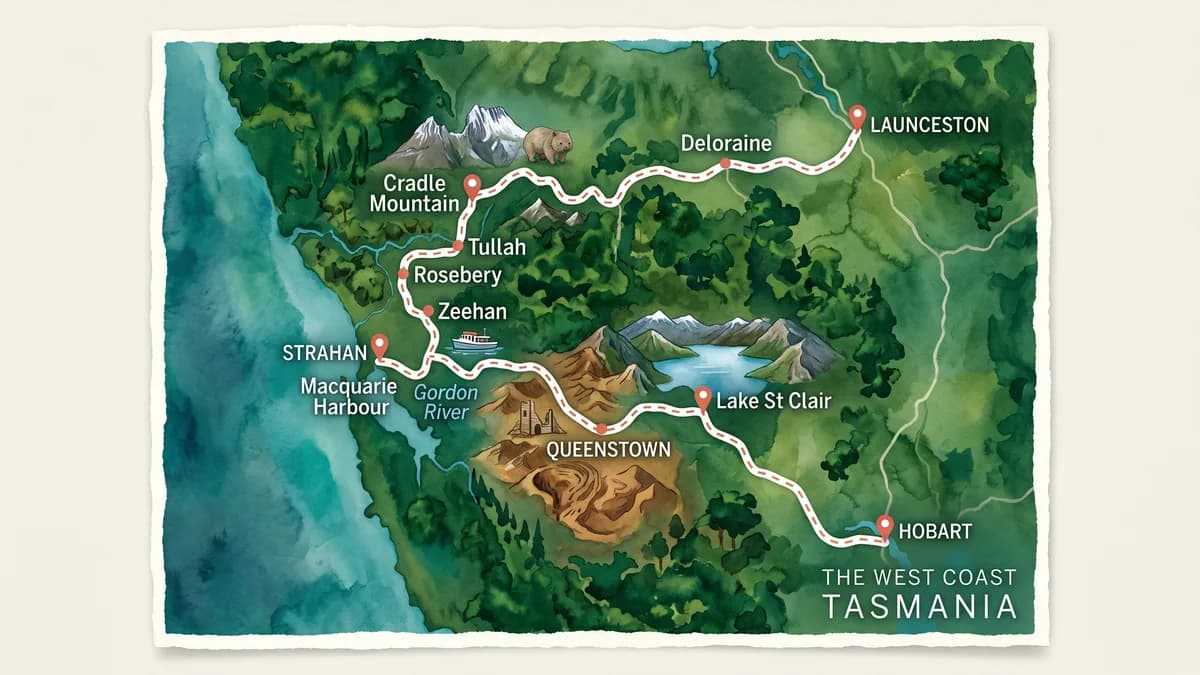
Interactive map — view larger map | Map data © OpenStreetMap contributors
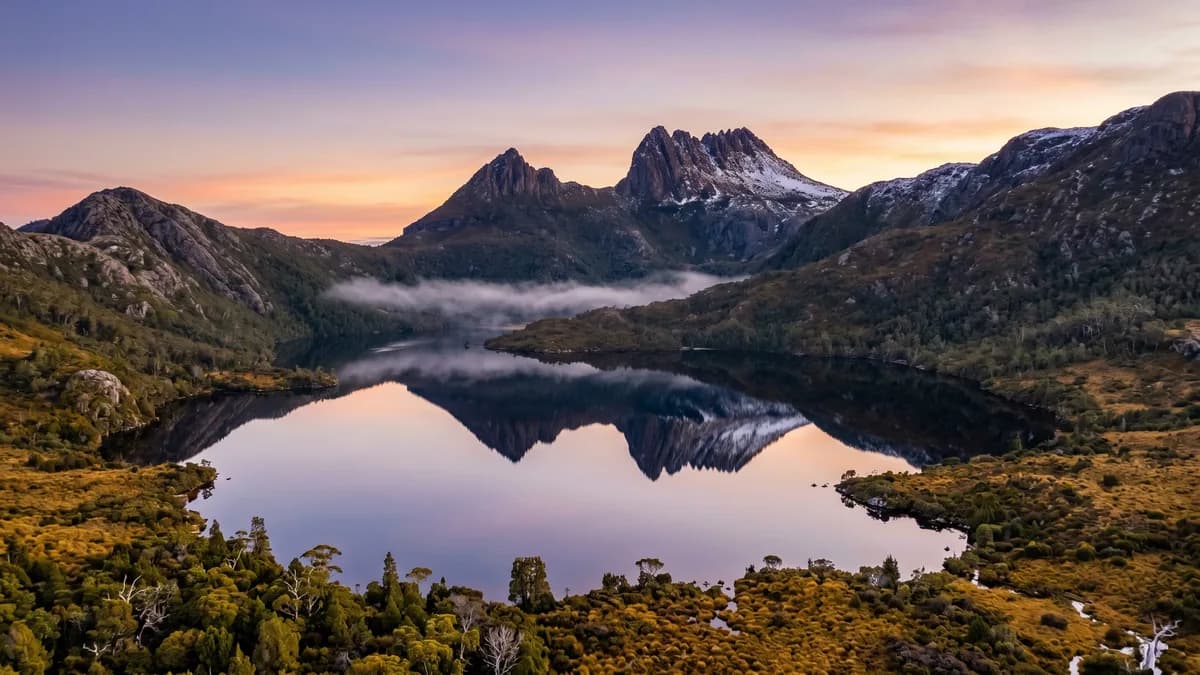
The west coast of Tasmania is unlike anywhere else in Australia. It's wetter, wilder, and more remote than you expect. The towns are tiny, the roads are empty, and the landscape shifts from alpine peaks to dense rainforest to abandoned mining moonscapes within a couple of hours. There's no phone signal for long stretches, fuel stops are far apart, and the weather can turn from sunshine to horizontal rain in twenty minutes.
It's also one of the most rewarding drives in the country. Cradle Mountain is world-class. The Gordon River is the stillest water you'll ever see. Strahan is a tiny harbour town where the wilderness literally starts at the edge of the main street. And the Lyell Highway between Queenstown and Hobart passes through landscape so empty it feels like you're the only person on the planet.
I drove this route in a hire car that smelled faintly of wet dog, got absolutely soaked at Dove Lake, and nearly hit a wombat the size of a small barrel on the road out of Queenstown. I'd go back tomorrow. Here's how to plan it properly — with three itinerary options depending on how much time you've got.
Getting There & Getting Around
Tasmania's west coast has no public transport. None. No buses, no trains, no rideshares. You need your own wheels — either a hire car or a campervan. Here are your options for getting to the island and getting around once you're there.
Hire Car
Pick up from Launceston Airport or Hobart Airport. Budget $50–90/day for a standard sedan or small SUV. A 2WD is fine — all the main roads on this route are sealed and well-maintained. The only time you'd want a 4WD is if you're planning to tackle the Western Explorer Road to the Tarkine (covered below).
Tip: Some hire companies charge a one-way fee if you pick up in Launceston and drop off in Hobart (or vice versa). Check this before booking — it can add $50–150 to your total. Alternatively, do the loop and return to your starting city.
Campervan
Excellent option for the west coast, especially if you're on a 5-7 day trip. Britz, Maui, and Cruisin' Tasmania have depots in Launceston and Hobart. A standard campervan (2-berth) runs about $100–180/day in peak season. You'll save on accommodation costs and have the flexibility to camp at free sites along the route.
Powered sites at caravan parks from about $35–55/night. Free camping available at several spots along the route (Lake Burbury, Hellyer Gorge, Lake Rosebery). Dump points at Strahan Beach Tourist Park and Discovery Parks Cradle Mountain.
Spirit of Tasmania
The Spirit of Tasmania ferry runs overnight from Melbourne (Geelong) to Devonport on Tasmania's north coast. It takes about 9 hours. You can bring your own car or campervan — vehicle fares start around $90 each way for a standard car, plus passenger fares from $170 per adult for a cabin.
Devonport is about 1.5 hours from Cradle Mountain, making this a solid option if you want to drive your own vehicle. The ferry arrives at 6:30 AM, so you can be at Cradle Mountain by 8 AM and start your trip fresh.
Fly & Drive
Fly into Launceston, hire a car, drive the west coast loop, and fly out of Hobart (or reverse). Jetstar and Virgin fly Melbourne/Sydney to Launceston and Hobart daily. Flights are often cheaper than the ferry once you factor in cabin and vehicle fares. The one-way car hire fee is usually worth paying to avoid backtracking.
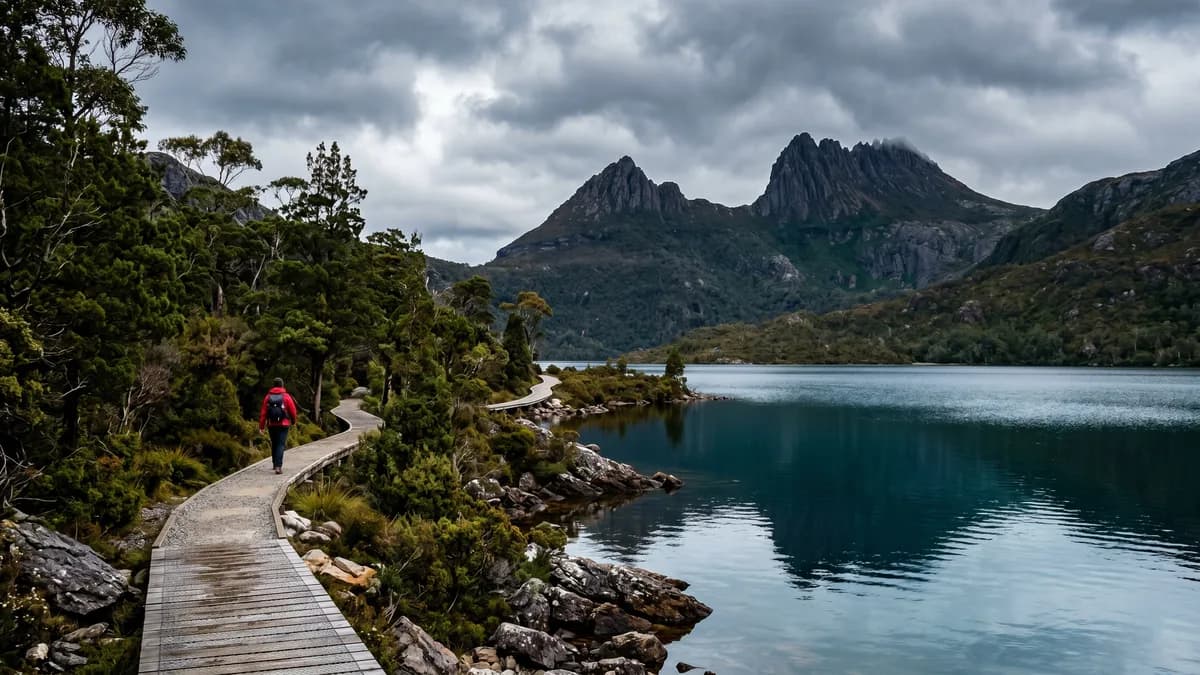
Dove Lake at sunrise — Cradle Mountain reflected in still water on a rare calm morning
3-Day Itinerary — The Highlights
Launceston → Cradle Mountain → Strahan → Hobart | ~750 km | Fast but doable
Three days is tight for the west coast — there's a lot of driving and you won't have time for the Gordon River cruise. But if three days is all you've got, this itinerary hits the major highlights and gives you a taste of how wild this part of Tasmania is. You'll need to be disciplined about time and accept you're seeing the highlights rather than lingering.
Day 1 — Launceston to Cradle Mountain (145 km, 2 hours driving)
8:00 AM — Leave Launceston
Head west on the Bass Highway towards Deloraine. The drive is easy — flat farmland with the Great Western Tiers mountain range rising to the south. Fill your fuel tank before leaving Launceston.
9:00 AM — Deloraine (30-minute stop)
A lovely little town on the Meander River. Good coffee at the Deloraine Deli, antique shops along the main street, and impressive views of the Great Western Tiers from the river walk. Stock up on snacks and lunch supplies here — there's nothing at Cradle Mountain except an expensive cafe.
10:30 AM — Arrive Cradle Mountain
Stop at the Visitor Centre to buy your National Parks Pass ($40/vehicle for 8 weeks) and get a shuttle bus timetable. Private cars can't drive to Dove Lake between 8 AM and 5 PM in peak season — the shuttle runs every 10-15 minutes and is included in your parks pass.
11:00 AM — Dove Lake Circuit (6 km, 2-3 hours)
The must-do walk. A boardwalk and gravel track circumnavigates Dove Lake with Cradle Mountain towering above. On a still morning the reflection is ridiculous. The track is well-maintained but can be muddy after rain — wear proper walking shoes, not thongs. Bring a windproof layer; it's exposed and cold even in summer.
2:00 PM — Waldheim Chalet & Rainforest Boardwalk
The historic Waldheim Chalet was built by Gustav Weindorfer in 1912 — the man who championed Cradle Mountain as a national park. Short boardwalk through pencil pine and King Billy pine rainforest. The Enchanted Walk (20 minutes) starts here and is magic — moss-covered myrtles like something from a fairy tale.
Visitor centre, Dove Lake car park, Ronny Creek — all with public toilets. Cleanest facilities on the west coast route.
Where to Stay — Night 1 (Cradle Mountain)
Budget: Discovery Parks Cradle Mountain (powered campsites from $35). Mid-range: Cradle Mountain Wilderness Village (self-contained cabins from $150). Splurge: Cradle Mountain Lodge (from $300 — the original wilderness lodge, with wombats on the lawn at dusk). Book early in summer.
Day 2 — Cradle Mountain to Strahan (175 km, 2.5 hours driving)
Fuel Warning
Fill up before leaving the Cradle Mountain area. There is no fuel until Tullah or Rosebery — small servos with limited hours and higher prices. The stretch between Cradle Mountain and the coast is remote with no services.
8:00 AM — Leave Cradle Mountain
Head south on the Murchison Highway. The landscape shifts from alpine button grass plains to dense rainforest. You'll pass through some of the emptiest road in Tasmania — don't expect phone signal until you reach a town.
9:30 AM — Tullah
A tiny hydro town on the edge of Lake Rosebery. The lake views are beautiful in the morning light — pull over at the foreshore for a stretch and a photo. There's a small servo here if you need fuel (check it's open — hours vary).
10:15 AM — Rosebery
A working mining town (gold and zinc). Not much to stop for unless you want to tackle the Montezuma Falls walk (3 hours return — save it for the 7-day itinerary). The main street has a basic cafe for coffee.
11:00 AM — Zeehan (30-minute stop)
Once Tasmania's third-largest city (during the silver mining boom in the 1890s), now a quiet town of about 700 people. The West Coast Heritage Centre is genuinely interesting — it covers mining history, the railways, and the convict era. Worth 30-60 minutes if you're into history.
12:30 PM — Arrive Strahan, lunch
Strahan (pronounced "strawn") is the main town on the west coast — population about 650. The waterfront esplanade has cafes and restaurants overlooking Macquarie Harbour. Grab lunch at Bushman's Bar or Risby Cove.
Afternoon — Ocean Beach & Hogarth Falls
Ocean Beach is a 40 km stretch of wild sand facing the Southern Ocean — the next landmass west is South America. It's dramatic and wind-blasted. The Hogarth Falls walk (20 minutes return) is an easy rainforest loop from the edge of town. Both are free and close to Strahan.
Waterfront esplanade, Ocean Beach car park, and cruise terminal — all with public toilet facilities.
Where to Stay — Night 2 (Strahan)
Budget: Strahan Beach Tourist Park (powered sites from $40). Mid-range: Strahan Village (waterfront rooms from $160). Splurge: Gordon Gateway Chalets (self-contained, bushland setting from $250). Strahan is small — book ahead in December-February.
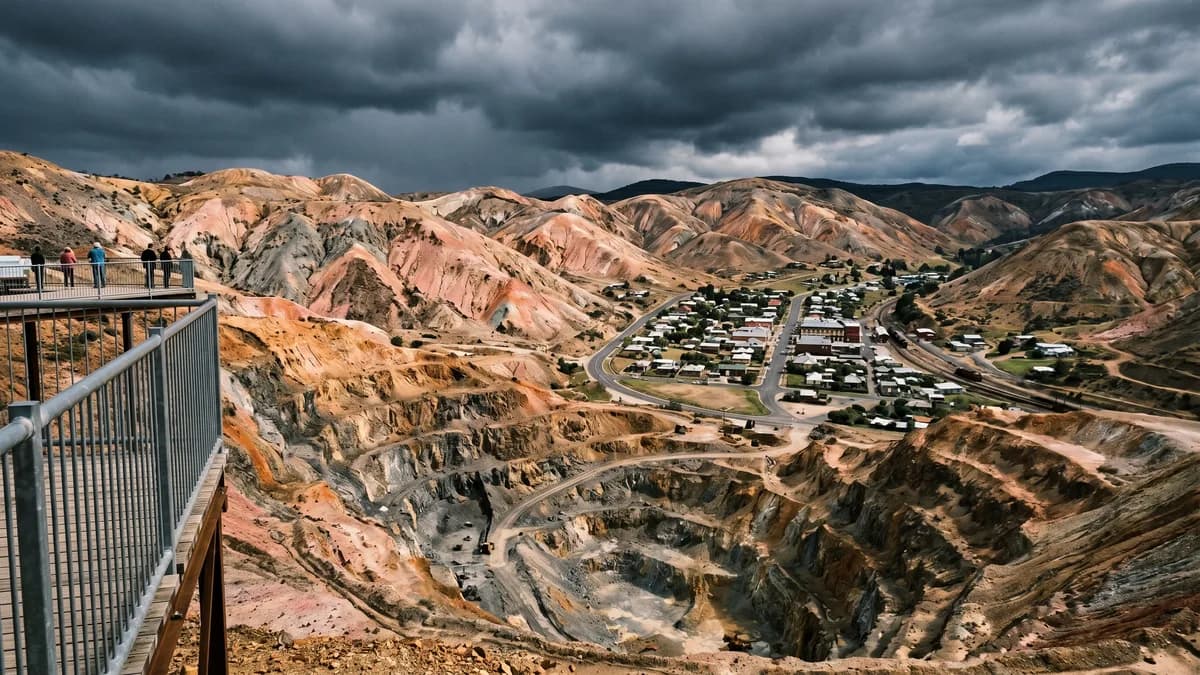
Queenstown — a century of mining stripped these hills completely bare
Day 3 — Strahan to Hobart via Queenstown & Lake St Clair (305 km, 4.5 hours driving)
Fuel Warning
Fill in Queenstown. The Lyell Highway between Queenstown and the Derwent Valley has no fuel for about 170 km. This catches people out — don't let it catch you.
8:00 AM — Leave Strahan
The road to Queenstown is one of the most dramatic in Tasmania. It climbs through rainforest and then descends into Queenstown through 99 bends — not an exaggeration, there's a sign counting them. The hills around Queenstown are completely bare, stripped by a century of mining and sulphur fumes. It looks like the surface of Mars.
8:45 AM — Queenstown (30-minute stop)
Drive to the Iron Blow Lookout on the edge of town — a viewing platform over the original open-cut mine. The scale is impressive and slightly horrifying. The town itself feels frozen in time — art deco buildings, a grand old pub, and not much else. Fuel up here.
10:30 AM — Lake St Clair (1-1.5 hours)
Australia's deepest freshwater lake and the southern end of the Overland Track. The Watersmeet Walk (5 km return, 1-1.5 hours) is a beautiful easy walk through tall eucalypt forest to where the Cuvier and Hugel rivers meet. Watch for platypus in the shallows — early morning is best.
Visitor centre and Cynthia Bay — public toilets at both. Clean, well-maintained facilities.
1:00 PM — Derwent Valley Drive
The Lyell Highway follows the Derwent River valley east towards Hobart. Stop at the Wall in the Wilderness at Derwent Bridge (a massive wood carving depicting Tasmania's pioneer history — $15 adult, worth 20 minutes). The rest of the drive is easy — rolling farmland, hop fields, and small towns.
3:30 PM — Arrive Hobart
If you arrive early enough, walk the Salamanca waterfront and grab dinner at one of the restaurants. You've earned it — you've just driven one of Australia's wildest routes.
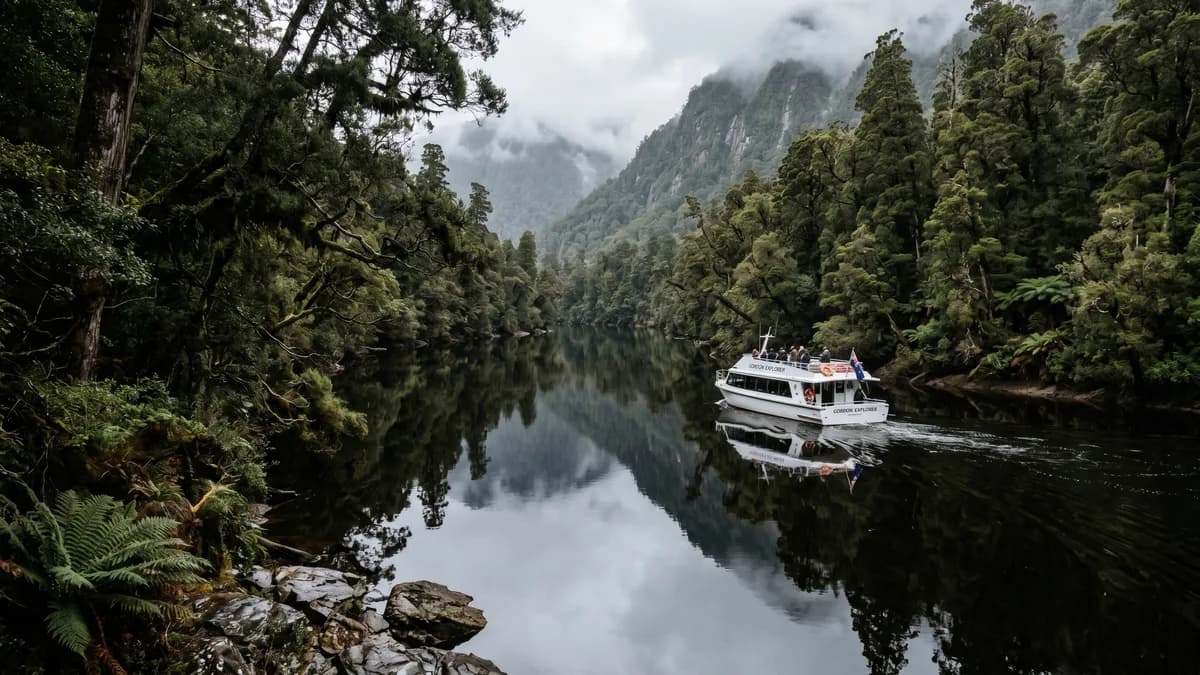
The Gordon River — so still it reflects like glass
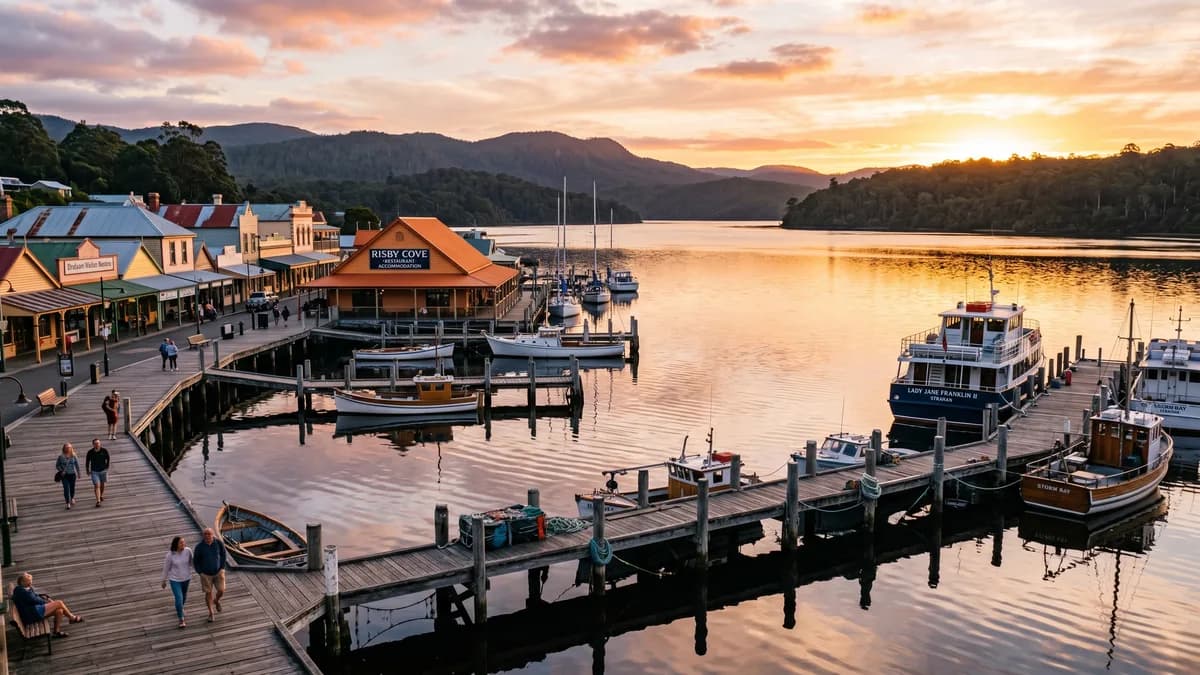
Strahan waterfront — the gateway to the Gordon River
5-Day Itinerary — The Sweet Spot
The pace this route deserves. Enough time for the Gordon River cruise, full days hiking, and not feeling rushed.
Five days is what I'd recommend to most people. You get a full day at Cradle Mountain without rushing, the Gordon River cruise (the highlight of the west coast), time to explore Strahan properly, and enough breathing room that you're not constantly in the car. This is the itinerary where the west coast starts to work its magic.
5-Day Overview
Day 1 — Launceston exploring + drive to Deloraine (50 km)
No need to rush out of Launceston. It's a surprisingly good city — better food and coffee than you'd expect for a place this size.
- Cataract Gorge — A genuine surprise. A wild gorge with cliffs, a suspension bridge, and a chairlift, all 15 minutes walk from the city centre. The Basin walk takes about 45 minutes and it's beautiful.
- City Park — Japanese macaque monkeys (yes, really), giant sequoias, Victorian gardens. A nice morning stroll.
- Seaport boardwalk — Restaurants and cafes along the Tamar River. Good lunch spot.
Cataract Gorge, City Park, Seaport — 18 mapped public toilets across the city.
2:00 PM — Drive to Deloraine
An easy 40-minute drive west. Deloraine is a gorgeous little town on the Meander River with a strong arts scene. Walk along the river, visit Yarns Artwork in Silk (four massive hand-stitched silk panels depicting local history — more impressive than it sounds), and check out the views of the Great Western Tiers from the bridge.
Town centre near the river and community hall car park — clean, accessible facilities.
Where to Stay — Night 1 (Deloraine)
Budget: Apex Caravan Park (basic, cheap, on the river). Mid-range: Arcoona Manor B&B (a restored 1860s mansion — great value). Splurge: Calstock (luxury farmstay just outside town).
Day 2 — Deloraine to Cradle Mountain (95 km, 1.5 hours driving)
A short drive with the whole day to explore Cradle Mountain properly. This is the day you'll remember.
- Sheffield (30 min stop) — The "Town of Murals" with 70+ large-scale murals on buildings throughout town. Quick coffee stop and photo opportunity.
- 10:00 AM — Dove Lake Circuit — Take your time on this walk. If it's a clear day, the reflections of Cradle Mountain in Dove Lake are some of the best landscape photography in Australia.
- 2:00 PM — Enchanted Walk or Weindorfers Forest Walk — Short rainforest boardwalks near the lodge area. Mossy, green, otherworldly.
- 3:30 PM — Waldheim Chalet — History of Weindorfer and the early conservation movement.
- Dusk — Wombat spotting at Ronny Creek — Almost guaranteed. The wombats here are habituated to people and graze openly on the button grass plains. They're the size of a large dog and completely unbothered by photographers. One of the best wildlife encounters in Tasmania.
Where to Stay — Night 2 (Cradle Mountain)
Same options as the 3-day itinerary. If you're campervanning, Discovery Parks has powered sites with decent amenities. The Lodge's Tavern Bar is open to non-guests for dinner — good pub meals after a long day hiking.
Day 3 — Cradle Mountain to Strahan (175 km)
A driving day with good stops along the way. The landscape changes dramatically as you head from alpine moorland to mining country to the coast.
- Morning — Quick walk to Crater Falls or Knyvet Falls before leaving (30-45 minutes each). Both are near the lodge area and make a good start to the day.
- Drive south — Through Tullah, Rosebery, and on to Zeehan. Remote, winding roads through thick rainforest.
- Zeehan — West Coast Heritage Centre (1 hour). Tasmania's mining history is fascinating and slightly insane — the things they did to this landscape are hard to comprehend.
- 1:00 PM — Arrive Strahan, lunch on the waterfront
- 3:00 PM — Hogarth Falls walk (20 min return through rainforest)
- 4:30 PM — Ocean Beach — Wild, wind-blasted, and enormous. Walk south along the sand — the next land west is Patagonia.
Where to Stay — Night 3 (Strahan)
Same options as the 3-day itinerary. If you're staying two nights (for the cruise tomorrow), you might as well unpack properly.
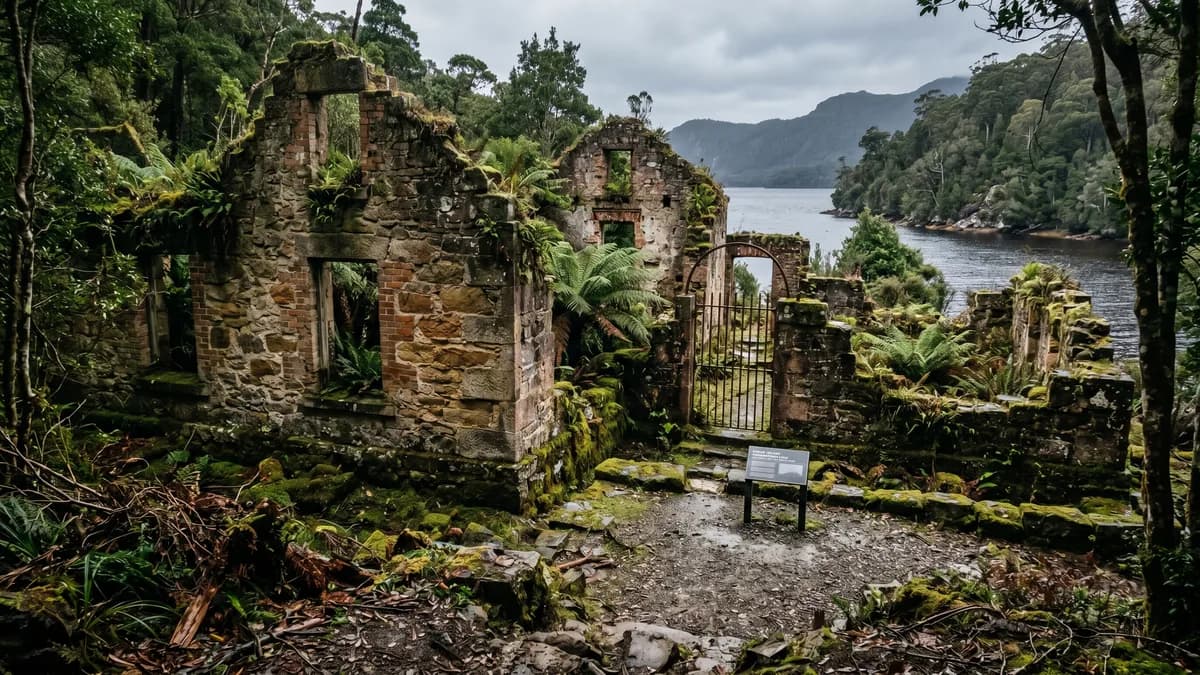
Sarah Island — one of Australia's most brutal convict settlements, accessible only by boat
Day 4 — Strahan (full day — Gordon River Cruise)
This is the day that makes the whole trip worthwhile. The Gordon River Cruise is a 6-hour journey into genuine wilderness — the kind of place where humans have barely left a mark.
- 8:30 AM — Gordon River Cruise departs — Book with Gordon River Cruises (the main operator). The boat heads out of Macquarie Harbour, past Hell's Gates (the narrow harbour entrance notorious for shipwrecks), and up the Gordon River.
- Heritage Landing — A boardwalk into Huon pine rainforest. These trees are 2,000+ years old and the forest has been growing undisturbed since the last ice age. The air smells like nothing else.
- Sarah Island — A convict settlement so remote and brutal it was used for the worst of the worst. The guided walk tells stories that are genuinely harrowing. The ruins sit on a small island in the middle of the harbour.
- ~2:30 PM — Return to Strahan
- 3:00 PM onwards — Wander the Strahan waterfront and esplanade. Relax — you've earned it.
- Alternative: If boats aren't your thing, the West Coast Wilderness Railway runs between Strahan and Queenstown through rainforest gorges. It's a heritage steam/diesel train and takes about 5 hours return.
Where to Stay — Night 4 (Strahan)
Same spot as last night. Two nights in Strahan gives you a proper feel for the town's rhythm — it's quiet, unhurried, and surprisingly relaxing for somewhere this remote.
Day 5 — Strahan to Hobart via Queenstown & Lake St Clair (305 km)
Same route as the 3-day Day 3 but with more time to enjoy it. Stop longer at Lake St Clair and don't miss the Wall in the Wilderness.
- Queenstown — Iron Blow Lookout, fuel up. The 99-bend road from Strahan is even better the second time you notice the scenery.
- Lake St Clair — With more time, add the Platypus Bay walk (short, flat, good platypus viewing) or Shadow Lake if you want a proper half-day hike.
- Wall in the Wilderness, Derwent Bridge — A massive ongoing wood carving by artist Greg Duncan. It depicts Tasmania's pioneer history in incredible detail. $15 adult, 20-30 minutes.
- Arrive Hobart ~4:30 PM — Salamanca waterfront for a well-deserved beer.
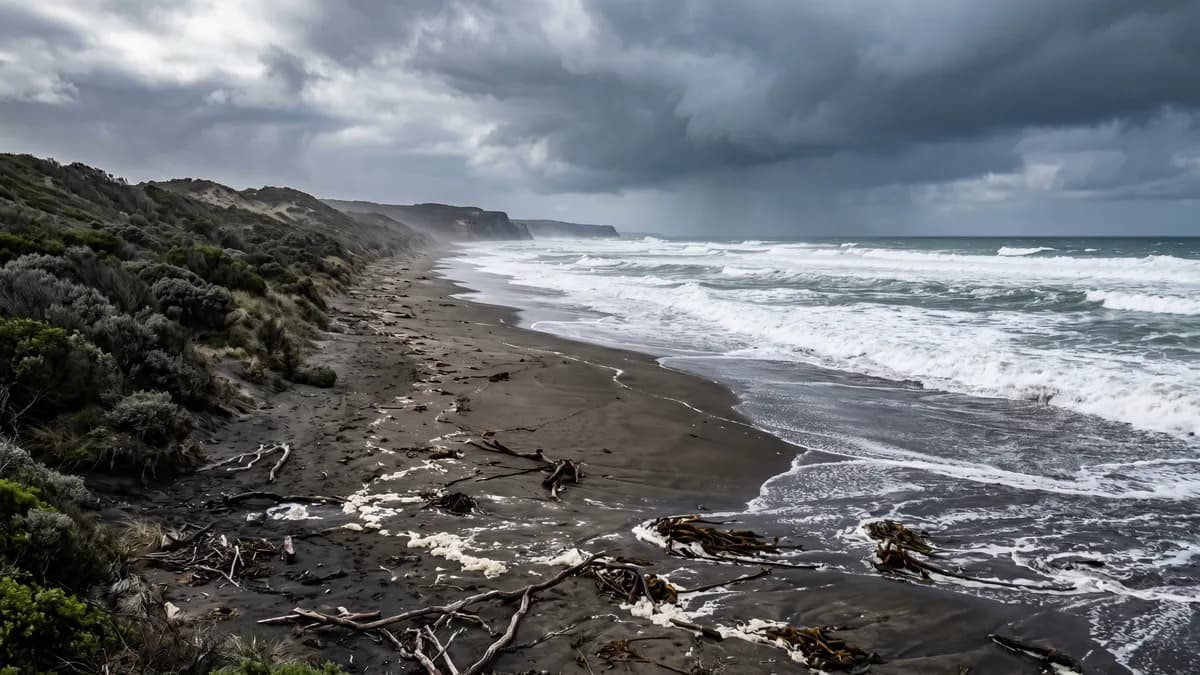
Ocean Beach — 40 km of wild sand facing the Southern Ocean
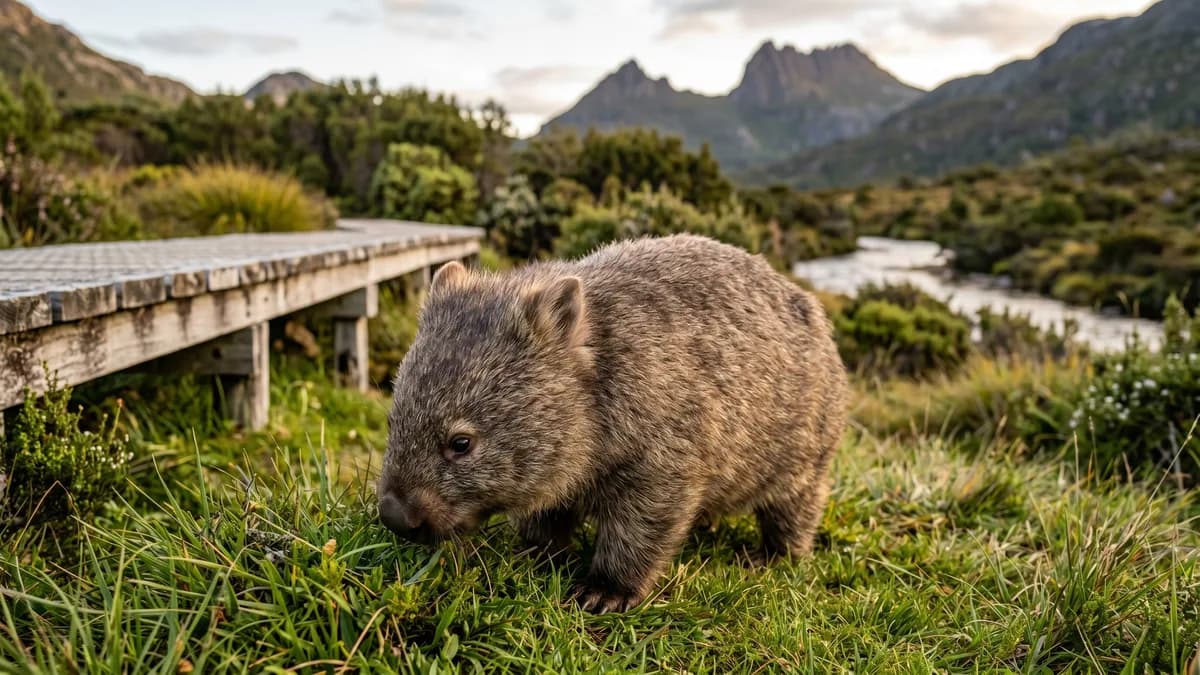
Wombat at Ronny Creek — they graze every evening at dusk
7-Day Itinerary — The Full Experience
The full west coast loop with time to breathe. Add longer walks, the Tarkine option, and a proper finish in Hobart.
Seven days is the proper way to do this. You stop rushing, the west coast starts to feel familiar, and you have time for the longer hikes, the mining town detours, and a couple of mornings where you just sit by a lake and watch the mist burn off. This is the itinerary for people who actually want to know this place, not just photograph it.
7-Day Overview
Day 1 — Devonport to Launceston (100 km)
If you're taking the Spirit of Tasmania, it arrives in Devonport around 6:30 AM. If you're flying in, land at Launceston and skip straight to the afternoon activities.
- Devonport — Bass Strait Maritime Centre (the Spirit of Tasmania story), Mersey Bluff Lighthouse for views, quick breakfast at the terminal cafe
- Drive to Launceston — Easy 1-hour drive along the Bass Highway
- Afternoon — Cataract Gorge — The Basin walk, suspension bridge, chairlift ($15 return). It's genuinely impressive for something this close to a city centre
- Seaport boardwalk — Dinner along the Tamar River. Stillwater is excellent if you want to splash out; Black Cow for steak
Spirit of Tasmania terminal, Mersey Bluff, town centre — 5 mapped public toilet facilities.
Where to Stay — Night 1 (Launceston)
Budget: Launceston Backpackers (central, clean). Mid-range: Peppers Seaport (right on the waterfront). Splurge: Stillwater Seven (seven rooms above the restaurant, boutique and beautiful).
Day 2 — Launceston to Cradle Mountain via Deloraine (145 km)
Combine the best of the 5-day Day 1 and Day 2 into one day — Deloraine in the morning, Cradle Mountain in the afternoon.
- Deloraine morning — Yarns Artwork in Silk, coffee, river walk. Stock up on food for Cradle Mountain.
- 12:00 PM — Arrive Cradle Mountain — National Parks Pass, shuttle bus orientation
- Afternoon — Dove Lake Circuit — The afternoon light on a clear day is beautiful. Less busy than morning in peak season.
- Evening — Wombat spotting at Ronny Creek — Dusk is prime time. Bring a headlamp for the walk back to the shuttle stop.
Where to Stay — Night 2 (Cradle Mountain)
You're here for two nights, so pick somewhere comfortable. Cradle Mountain Lodge is worth it if budget allows — the King Billy Suites have wood fires and the spa is welcome after a day of hiking.
Day 3 — Cradle Mountain (full day)
A full day to tackle the bigger walks and really appreciate the alpine landscape. This is where having seven days pays off — most people rush through Cradle Mountain in half a day and miss the best bits.
- Morning — Marion's Lookout (12 km return, 3-4 hours, hard). The signature summit walk. Steep scramble up chains and rock faces to a plateau with panoramic views of Cradle Mountain, Dove Lake, Crater Lake, and the surrounding peaks. Not for vertigo sufferers and genuinely dangerous in wet/icy conditions. Check conditions with the Visitor Centre. OR:
- Alternative — Crater Lake Circuit (6 km, 2 hours, moderate). A gentler option that circles the volcanic crater lake behind Cradle Mountain. Beautiful reflections, less exposed than Marion's.
- Short walks — Enchanted Walk (20 min, rainforest boardwalk), King Billy Track (30 min, ancient pine forest). These are lovely for filling an afternoon.
- Waldheim Chalet — History of Gustav Weindorfer and the early conservation movement. Short walk from the shuttle stop.
- Rain plan — Devils@Cradle — A wildlife park with Tasmanian devils, quolls, and other native species in large enclosures. The devil feeding sessions are fascinating. Good option if the weather is terrible (and it often is).
Where to Stay — Night 3 (Cradle Mountain)
Same spot as last night. Dinner at the Lodge Tavern Bar — wallaby pie and a local beer after a big hike is hard to beat.
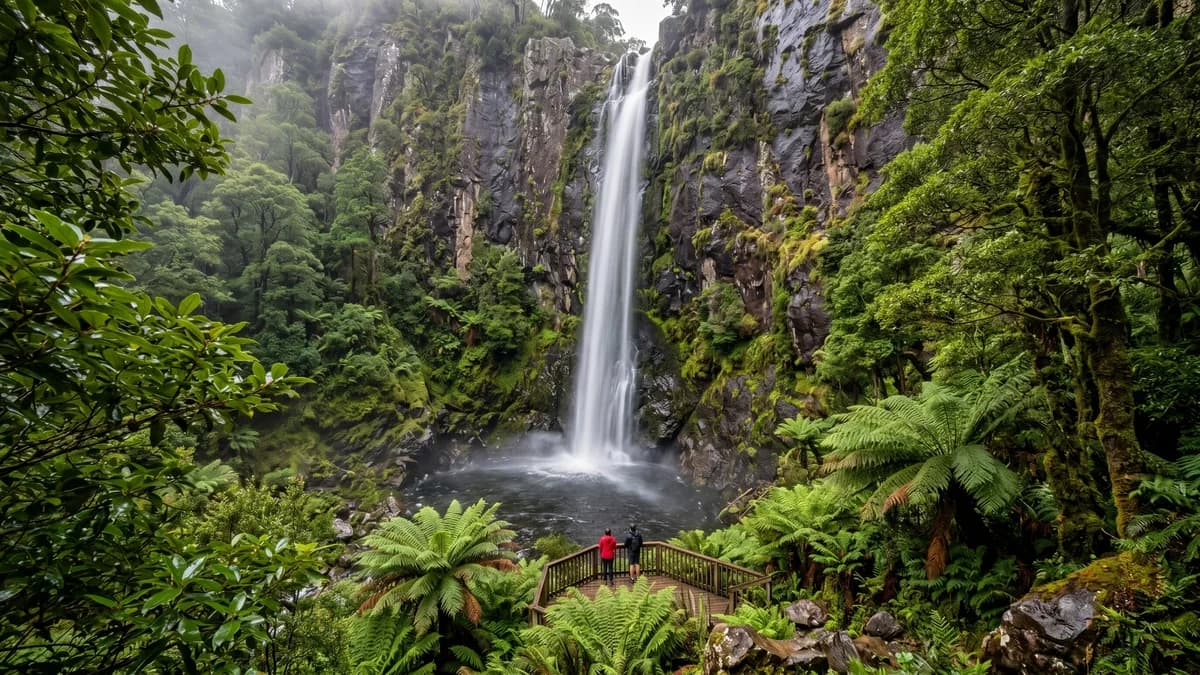
Montezuma Falls — Tasmania's tallest waterfall at 104 metres, hidden in the rainforest near Rosebery
Day 4 — Cradle Mountain to Strahan via mining towns (175 km)
The seven-day version adds the Montezuma Falls walk and the Wee Georgie Wood steam train. Fill up on fuel before leaving Cradle Mountain — same warning as before.
- Tullah — Lake Rosebery foreshore for views. The Wee Georgie Wood steam train runs on selected days (check schedule) — a restored heritage railway from the mining era. 30 min ride.
- Rosebery — Montezuma Falls (8 km return, 3 hours, easy-moderate). Tasmania's tallest waterfall at 104 metres. The walk follows an old tramway track through stunning rainforest — flat and easy walking with a huge payoff at the end. One of the best short walks in Tasmania and most people don't know it exists.
- Zeehan — West Coast Heritage Centre (1-1.5 hours). The mineral collection alone is worth the stop.
- 2:00 PM — Arrive Strahan — Hogarth Falls walk, Ocean Beach, settle in
Where to Stay — Night 4 (Strahan)
First of two nights in Strahan. Settle in — you've got an early start for the cruise tomorrow.
Day 5 — Strahan — Gordon River Cruise
The full day cruise as described in the 5-day itinerary, plus evening entertainment.
- Full day Gordon River Cruise — Same as 5-day Day 4. Heritage Landing, Sarah Island, the impossibly still river.
- 5:30 PM — The Ship That Never Was — An outdoor play performed on the Strahan waterfront telling the true story of convicts who built a ship on Sarah Island and escaped to Chile. It's hilarious, family-friendly, and is Australia's longest-running play. Free (gold coin donation). Don't miss it.
- Dinner — Risby Cove for a proper meal. You've been on a boat all day, treat yourself.
Where to Stay — Night 5 (Strahan)
Same spot as last night.
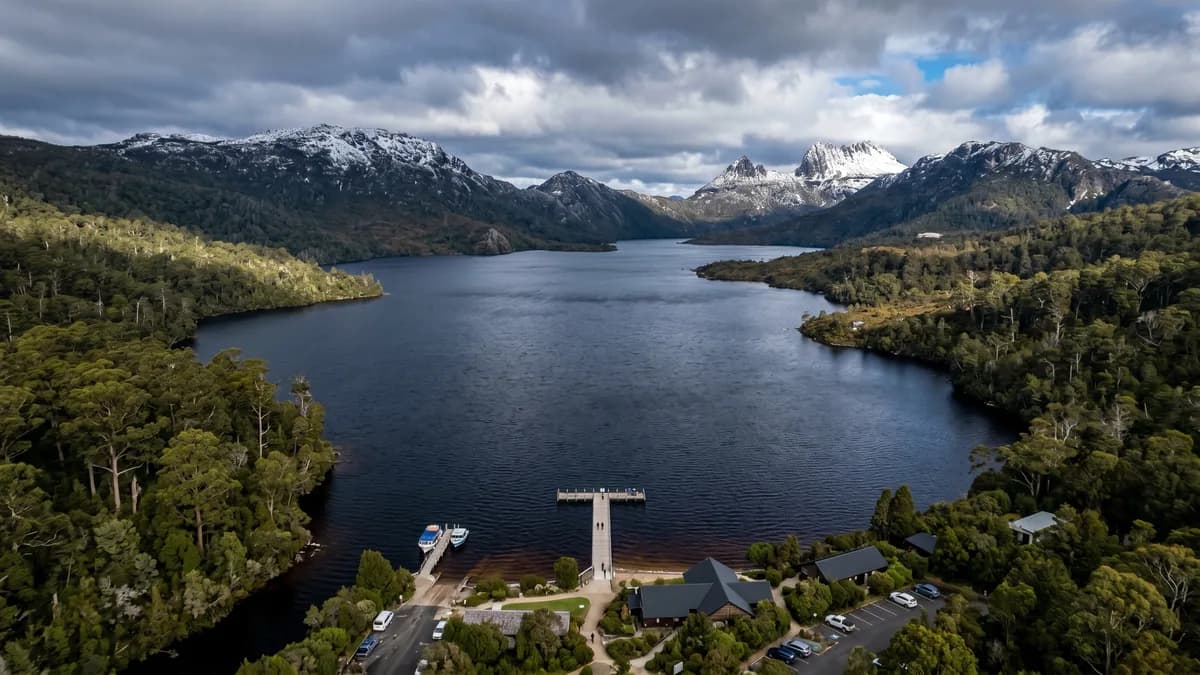
Lake St Clair — Australia's deepest lake, the southern end of the Overland Track
Day 6 — Strahan to Lake St Clair via Queenstown (170 km)
A shorter driving day that gives you the whole afternoon at Lake St Clair for walking.
- Queenstown — Iron Blow Lookout, Spion Kop Lookout (views over the bare hills and the town below). Fill up on fuel.
- Option: West Coast Wilderness Railway — If you missed it, this is your last chance. The Queenstown to Strahan section goes through some incredible rainforest gorges.
- 12:00 PM — Arrive Lake St Clair — Grab lunch at the visitor centre cafe (basic but decent)
- Afternoon — Shadow Lake or Forgotten Lake walk (12 km return, 4-5 hours, moderate). Through alpine terrain to a quiet, reflective lake surrounded by ancient rainforest. Fewer people than the Overland Track walks and equally beautiful.
- Dusk — Platypus Bay — Walk the short track to Platypus Bay as the light fades. Platypus are most active at dawn and dusk. Sit quietly on the bank and wait — they're often spotted here.
Where to Stay — Night 6 (Lake St Clair area)
Budget: Derwent Bridge Wilderness Hotel (basic pub rooms from $90). Mid-range: Lake St Clair Lodge (comfortable, right near the lake). Splurge: Pumphouse Point (a converted 1940s pump station literally on the lake — one of Tasmania's most unique stays, from $450/night).
Day 7 — Lake St Clair to Hobart (175 km)
An easy final day with a morning walk and a relaxed drive to Hobart.
- Morning — Watersmeet Walk (5 km return, 1.5 hours). Through tall forest to where the Cuvier and Hugel rivers converge. A peaceful farewell to the wilderness.
- Wall in the Wilderness at Derwent Bridge — If you haven't already stopped, do it now. Greg Duncan's massive wood carvings are extraordinary.
- Stop at Hamilton or Ouse — Small farming towns in the Derwent Valley. Good bakeries with proper meat pies.
- 1:30 PM — Arrive Hobart
- Afternoon — Salamanca waterfront, Battery Point heritage walk, or catch the MONA ferry (25 minutes from Brooke Street Pier) if you have time. MONA is unlike any museum you've been to — weird, confronting, brilliant.
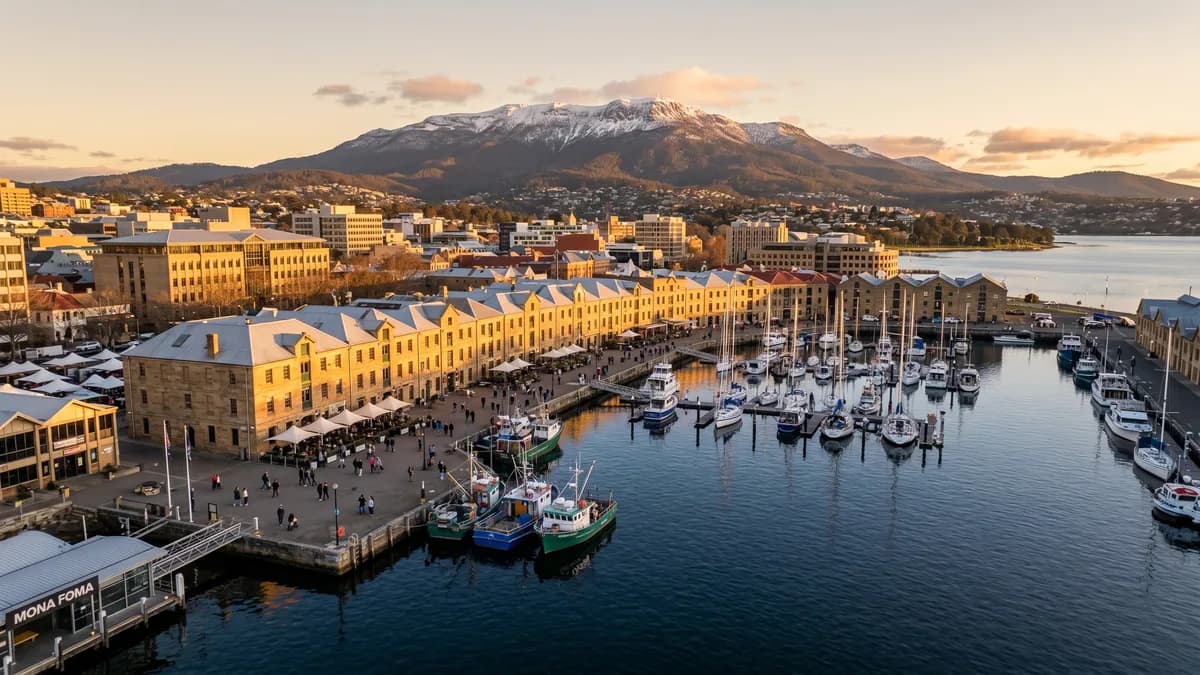
Salamanca waterfront, Hobart — a proper reward after a week in the wilderness
Hiking Trails
The west coast has some of Tasmania's best walking. From 20-minute rainforest boardwalks to multi-day wilderness treks, there's something for every fitness level. Here are the highlights you can fit into a road trip.
Dove Lake Circuit
6 km | 2-3 hrs | Moderate
The must-do walk. Circumnavigates Dove Lake with Cradle Mountain towering above. Boardwalk and gravel. Can be muddy after rain. Bring layers — it's exposed and cold even in summer.
Marion's Lookout
12 km return | 3-4 hrs | Hard
Steep scramble to summit with panoramic views of Cradle Mountain, Dove Lake, and surrounding peaks. Not for the faint-hearted in wet weather. Chains on exposed sections.
Enchanted Walk
1 km | 20 min | Easy
Boardwalk through moss-covered myrtle rainforest at Cradle Mountain. Perfect for families or a quick morning walk. Feels like a fairy tale — everything is dripping and green.
Montezuma Falls
8 km return | 3 hrs | Easy-Moderate
Tasmania's tallest waterfall (104m) near Rosebery. Flat old tramway track through rainforest. Rewarding payoff. One of the best kept secrets on the west coast.
Hogarth Falls
1.5 km return | 40 min | Easy
Rainforest walk from Strahan to a small waterfall on Botanical Creek. Good for stretching legs after driving. Platypus sometimes spotted in the creek.
Watersmeet Walk
5 km return | 1.5 hrs | Easy
From Cynthia Bay at Lake St Clair through tall forest to where rivers meet. Platypus possible. Beautiful morning walk — peaceful and uncrowded.
Shadow Lake
12 km return | 4-5 hrs | Moderate
From Lake St Clair through alpine terrain. Quieter than the main walks, beautiful reflections. A proper half-day commitment but worth every step.
Overland Track
65 km | 5-6 days | Hard
Starts at Cradle Mountain, ends at Lake St Clair. Permit required ($200 Oct-May). Australia's most famous multi-day walk. A separate trip entirely — but you'll see both ends on this road trip.
4WD Tracks
The west coast has some serious 4WD tracks for those with the right vehicle and experience. These are not for standard hire cars — you need a proper 4WD with decent tyres, recovery gear, and ideally someone who knows what they're doing.
Western Explorer Road (Corinna to Arthur River)
100 km | Moderate 4WD
The big one — links west coast to the Tarkine. River crossing at Corinna (barge). Gravel, some rough sections. Allow 4-5 hours. Fuel up before — no servos anywhere on this route.
Bird River Track
20 km | Moderate 4WD
Near Zeehan, leads to remote bushland. Forestry track, can be rough after rain. Suitable for experienced 4WD drivers with proper tyres.
Balfour Track
35 km | Hard 4WD
Remote track to Pieman River mouth. Very isolated. Recovery gear essential. Not for beginners. Tell someone exactly where you're going.
Lake Johnston Track
15 km | Easy-Moderate 4WD
Near Tullah, access to remote lake fishing. Forestry road, generally well-maintained. The most accessible of the 4WD options listed here.
4WD Safety Note
Many west coast forestry roads are unsealed but 2WD-accessible in dry weather. The serious 4WD tracks listed above are remote — tell someone your plans, carry recovery gear, and check conditions with Parks Tasmania before heading out. Mobile signal is non-existent on these tracks.
Camping
The west coast is excellent camping territory. Free bush camps, national park sites, and caravan parks at the main towns. Here's what's available.
Free & Basic Camping
- Lake Burbury Foreshore (near Queenstown) — Free, basic, lakeside. Scenic but remote.
- Hellyer Gorge Rest Area (between Cradle Mountain and coast) — Free, basic. Shady rainforest setting.
- Nelson Falls Rest Area (Lyell Highway) — Free, basic facilities. Close to a short waterfall walk.
- Macquarie Heads Pine Forest (near Strahan) — Free, sandy site near Ocean Beach.
- Lake Rosebery Foreshore (Tullah) — Free, lakeside. Beautiful morning light on the water.
National Park Campsites
- Discovery Parks Cradle Mountain — Powered + unpowered sites, $35-55/night. Hot showers, camp kitchen, dump point.
- Lake St Clair Campground at Cynthia Bay — Unpowered, $16/night. Basic but well-located right at the lake.
- Echo Point Campsite at Lake St Clair — Free, basic. Walk-in only, peaceful lakeside spot.
Caravan Parks
- Strahan Beach Tourist Park — Powered sites from $40/night. Dump point, laundry, good amenities.
- Queenstown Cabin & Tourist Park — Powered sites from $30/night. Basic but cheap and well-located.
- Tullah Lakeside Park — Basic, cheap, lakeside setting. No frills but the location is lovely.
Wild Camping Rules
- Tasmania allows wild camping in some national parks with conditions
- No fires in total fire ban periods (check Tasmania Fire Service website)
- Carry out all rubbish — leave no trace
- Camp 100m from walking tracks and water sources
- National Parks Pass required — $40/vehicle for 8 weeks or $80/year
Dump points: Strahan Beach Tourist Park and Discovery Parks Cradle Mountain both have dump points for campervans. These are the only two on the west coast route — plan your tank dumps around these stops.
Where to Eat on the West Coast
Let's be honest — you're not coming to Tasmania's west coast for fine dining. The food scene is limited but there are some gems, and the main thing is knowing where to find a proper meal so you're not living on servo pies for a week. Bring snacks and be prepared to self-cater some meals if you're on the 5-7 day trip.
Risby Cove, Strahan
Best restaurant on the west coast. Local seafood, good wine list. Pan-fried trevalla is excellent. Book ahead in summer — it's the only proper dinner option in town and fills up fast.
Bushman's Bar & Cafe, Strahan
Casual. Burgers, fish and chips, local beers. Outdoor deck over the harbour. Solid lunch option and less formal than Risby Cove. Good for families.
Cradle Mountain Lodge Tavern Bar
Pub meals after hiking. Wallaby pie, Tassie beef burgers. Not fancy but exactly what you want when you're cold and tired from a day on the mountain. Open to non-guests.
The Empire Hotel, Queenstown
Historic pub in the most surreal town in Tasmania. Steak and parma. Cheap counter meals in a building that hasn't changed in 50 years. The whole town is a time capsule.
Deloraine Deli, Deloraine
Excellent pies and sandwiches. Good coffee. Ideal stop before Cradle Mountain. Stock up here — there is nothing on the mountain except an expensive cafe at the visitor centre.
Hungry Wombat Cafe, Derwent Bridge
Only food near Lake St Clair. Basic but decent. Pies, toasties, coffee. Don't expect gourmet but it fills the gap between Queenstown and Hobart when there's nothing else for 170 km.
Where to Stay
Accommodation on the west coast is limited and books out in peak season (December-February). Don't leave it to the last minute — Strahan in particular has very few options and they fill weeks ahead. In winter you'll have your pick and prices drop significantly.
| Town | Budget ($40-90) | Mid-Range ($120-220) | Splurge ($250+) |
|---|---|---|---|
| Launceston | Launceston Backpackers | Peppers Seaport | Stillwater Seven |
| Deloraine | Apex Caravan Park | Arcoona Manor B&B | Calstock |
| Cradle Mountain | Discovery Parks | Cradle Mountain Wilderness Village | Cradle Mountain Lodge |
| Strahan | Strahan Beach Tourist Park | Strahan Village | Gordon Gateway Chalets |
| Lake St Clair | Derwent Bridge Wilderness Hotel | Lake St Clair Lodge | Pumphouse Point |
| Hobart | Montacute Boutique Bunkhouse | The Old Woolstore | MACq 01 Hotel |
Every Toilet Stop on the West Coast
This is why Dunny Dash exists. Public toilets on the west coast are fewer and further between than on the mainland — the gaps are longer and there are stretches where you genuinely have no options. Plan ahead, and use the facilities whenever you see them.
Spirit of Tasmania terminal, Mersey Bluff
Cataract Gorge, City Park, Seaport — 18 facilities
Town centre & community hall car park
Visitor centre, Dove Lake, Ronny Creek
Waterfront, Ocean Beach, cruise terminal
Visitor centre & Cynthia Bay
Salamanca, waterfront, city centre
Longest Gaps Without Facilities
The stretch between Cradle Mountain and Tullah (about 90 minutes driving) has no public toilet facilities. Use the facilities at Cradle Mountain Visitor Centre before this section. The Lyell Highway between Queenstown and Lake St Clair (about 1.5 hours) also has very limited stops — there's a basic rest area at Nelson Falls but that's it. Plan accordingly.
Local Tips
Weather
200+ rain days per year on the west coast. Pack a proper waterproof jacket and layers even in January. Cradle Mountain is 5-10°C colder than Strahan. Snow is possible at Dove Lake in November. The weather changes fast — four seasons in one day is not a joke here.
Fuel
Fill up in Launceston/Devonport/Deloraine before Cradle Mountain. No fuel at Cradle Mountain. Next fuel Tullah/Rosebery (small servos, expensive, limited hours). Fill again in Strahan/Queenstown before the Lyell Highway — no fuel for 170 km to Derwent Valley.
Phone Signal
Coverage is patchy at best. Telstra works in towns but drops between them. The stretch from Cradle Mountain to Strahan is basically a dead zone. Download offline maps before you leave. Tell someone your itinerary. Don't rely on your phone for navigation in remote sections.
Wildlife
Wombats, wallabies, and possums are active at dawn and dusk. West coast roads are notorious for wildlife roadkill. Drive slowly after 4 PM and before 8 AM. Wombats are solid muscle — hitting one at speed can write off a car. Take it seriously.
Driving
Roads are sealed but narrow and winding. Cradle Mountain Road is steep. The Queenstown to Strahan stretch has 99 bends. Allow more time than Google Maps suggests. Pull over for faster traffic. Winter may require chains at Cradle Mountain — check conditions before driving up.
Supplies
Stock up in Launceston or Devonport. Strahan has a small supermarket (limited range, expensive). Queenstown has a basic IGA. There is no supermarket at Cradle Mountain, Lake St Clair, or Derwent Bridge. Bring snacks, lunch supplies, and anything specific you need.
Frequently Asked Questions
How many days do you need for Tasmania's west coast?
Three days is the minimum to hit the highlights (Cradle Mountain, Strahan, Lake St Clair), five days is the sweet spot that lets you do the Gordon River cruise and hike properly, and seven days is ideal if you want to fully explore without rushing. Less than three days means too much driving and not enough time at each stop.
Is the Gordon River cruise worth doing?
Yes — it is the highlight of the west coast for most visitors. The cruise takes about 6 hours and includes Heritage Landing (a boardwalk into Huon pine rainforest that has been growing for thousands of years) and Sarah Island (a brutal convict settlement). The river itself is mirror-still and impossibly dark. Book the upper deck window seats if you can.
Does it rain a lot on Tasmania's west coast?
Yes. Strahan gets around 1800mm of rainfall per year — roughly three times what Sydney gets. The west coast sits directly in the path of the Roaring Forties, the prevailing westerly winds that blow in from the Southern Ocean. Pack proper waterproof gear (not just a hoodie) and expect rain on at least some of your trip regardless of season.
Is there phone signal on Tasmania's west coast?
Barely. Telstra has the best coverage but even that drops out between Cradle Mountain and Strahan. You will have no reliable signal for long stretches. Optus and Vodafone are essentially useless outside the towns. Download offline maps, tell someone your itinerary, and carry a paper map as backup.
Where are the public toilets on Tasmania's west coast?
Public toilets are located at Cradle Mountain Visitor Centre, Dove Lake car park, Ronny Creek, Strahan waterfront and cruise terminal, Queenstown town centre, and Lake St Clair Visitor Centre at Cynthia Bay. The longest gap without facilities is between Cradle Mountain and Tullah — about 90 minutes of driving with no public toilet.
Can you do the west coast as a day trip from Hobart?
No. Strahan is 4.5 hours one-way from Hobart, and Cradle Mountain is nearly 3 hours from Launceston. You need a minimum of 2 nights to see the west coast properly, and ideally 3-5 nights. A day trip would mean 9+ hours of driving and no time to actually see anything.
Should I drive clockwise or anticlockwise?
Most people go Launceston to Cradle Mountain to Strahan to Lake St Clair to Hobart — essentially north to south. This works well because you start at the highest, coldest point (Cradle Mountain) and work your way to milder weather. It also means you finish in Hobart, which is a better city to end a trip in than Launceston.
What is the best time of year to visit Tasmania's west coast?
December to March is warmest (15-22C in Strahan) with January and February the driest months. April to May brings stunning autumn colour at Cradle Mountain with fagus (Tasmania's only deciduous tree) turning gold and orange. Winter (June-August) is cold, wet, and cheap — Cradle Mountain gets snow, but you will have the place to yourself and accommodation is half price.
More Australian Travel Guides
Planning a longer trip? Check out our other itineraries.
Driven Tasmania's west coast?
Got a tip I've missed? Know a toilet stop that's closed or a new one that's opened? Let me know and I'll update this guide.