Duration
1 day (sprint), 2 days (weekender), 3 days (sweet spot), 5 days (full experience)
Best Time
Nov–Mar for weather, Apr–May for fewer crowds, Jun–Aug for whale watching
Budget
$50–80/day (camping) to $200–400/day (hotels + dining)
Getting Around
Hire car, campervan, bus tour, motorbike
Distance
243 km (Torquay to Allansford) — plus detours
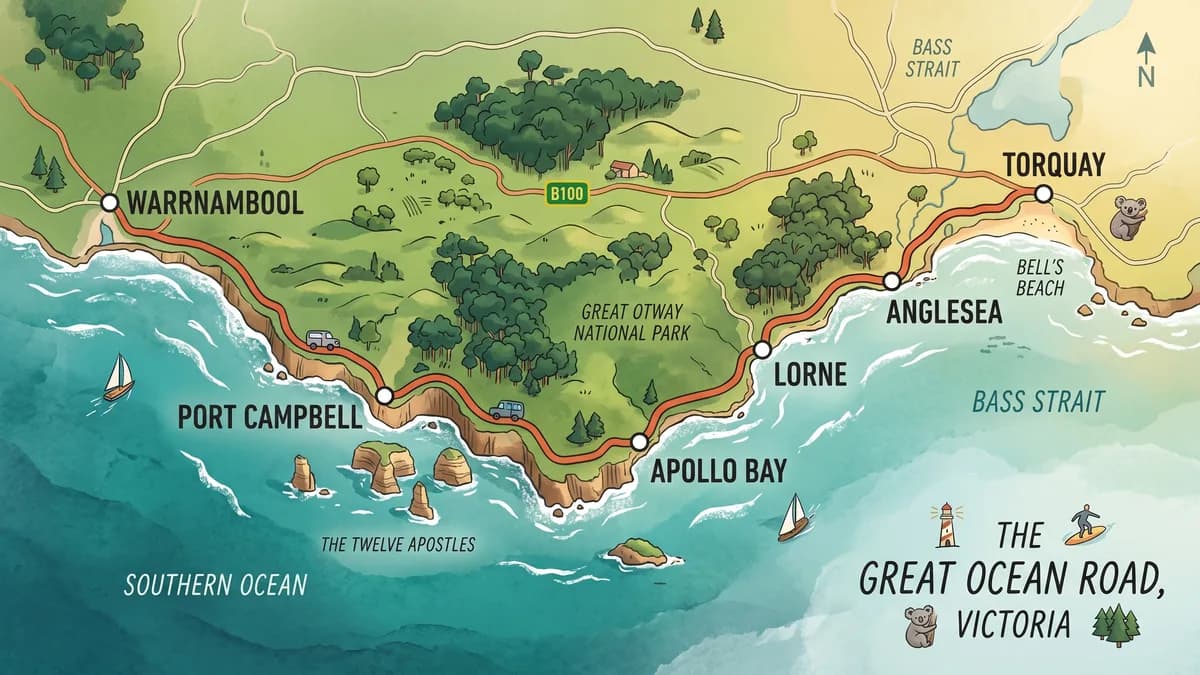
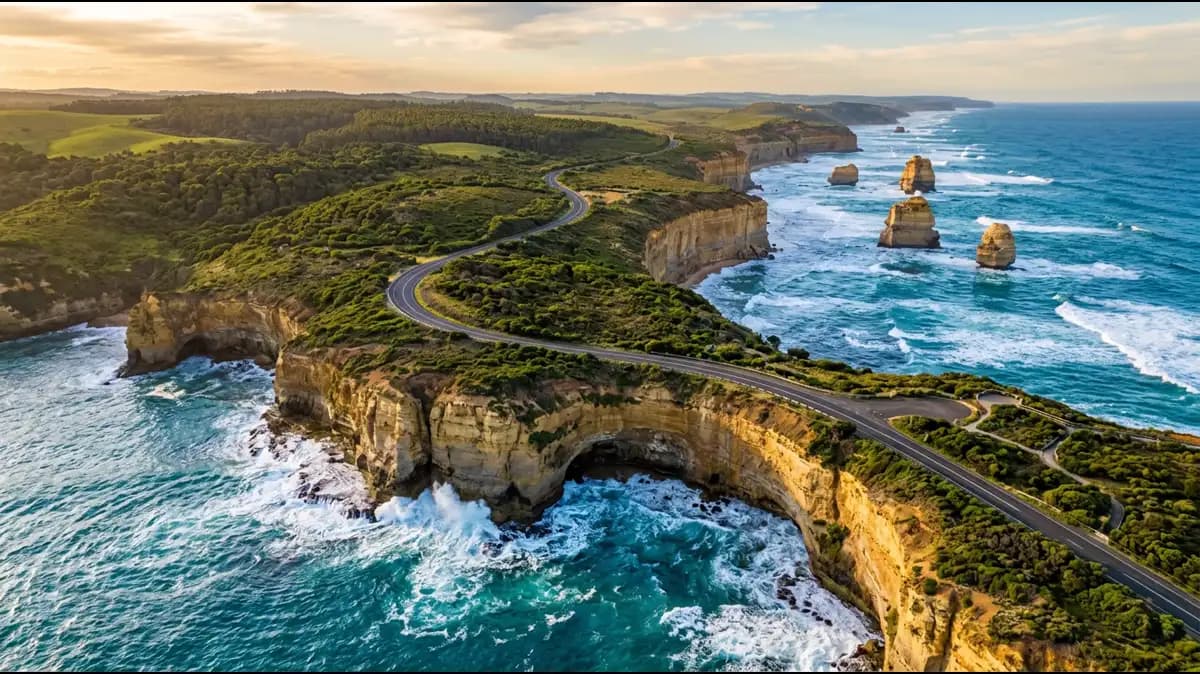
The Great Ocean Road is 243 kilometres of coastline carved into the cliffs of south-west Victoria. It starts at Torquay — about 90 minutes from Melbourne — and winds through surf towns, rainforest, and limestone stacks all the way to Allansford, just east of Warrnambool.
Most people know it for the Twelve Apostles, and fair enough — they're spectacular. But the best bits are the ones between the famous lookouts. The wild koalas at Kennett River. The fish and chips you eat sitting on the Apollo Bay harbour wall. The Otway rainforest when it's dripping with rain and you've got the walking track to yourself.
I've driven this road more times than I can count — in a hire car, in a mate's campervan, on a motorbike, and once in a rental that had no air conditioning in February. Every trip is different depending on how much time you have, so I've put together four itineraries: a one-day sprint if that's all you've got, a two-day weekender, the three-day sweet spot, and a five-day deep dive for when you really want to explore.
Getting There & Getting Around
The Great Ocean Road starts at Torquay, about 100 km south-west of Melbourne. How you get there and how you travel the road depends on what suits your trip.
Hire Car
The most popular option. Pick up from Melbourne Airport or the CBD and drive to Torquay via the M1 freeway (about 90 minutes). A standard hatchback is fine — the road is sealed the entire way. Budget $40–80/day for a rental. Fill your tank in Geelong before you hit the coast — fuel prices climb once you're on the GOR.
Tip: Drive Melbourne → Warrnambool (west-bound). You'll be on the ocean side of the road, which means better views and easier access to lookout car parks. Coming back east-bound, the lookout pull-offs are on the opposite side of the road and you'll be doing U-turns all day.
Campervan
Brilliant way to do the GOR, especially on a 3-5 day trip. Apollo Motorhomes, Britz, and Jucy all have depots near Melbourne Airport. A standard campervan (under 3m tall) fits everywhere on the route — no height restrictions at lookouts or car parks.
Free camping at Johanna Beach (basic — no facilities, just beach) and Aire River (toilet, no showers). Powered sites in Torquay, Lorne, Apollo Bay, Port Campbell, and Warrnambool from about $35/night. Dump points at Apollo Bay and Port Campbell.
Bus Tour
If you don't want to drive, day tours from Melbourne run daily from about $100. They cover the highlights — Memorial Arch, Lorne, Apollo Bay, Twelve Apostles — but it's a long day (12+ hours) and you're on someone else's schedule. Multi-day tours (2-3 days) give you more breathing room and usually include accommodation in Lorne or Apollo Bay.
V/Line runs a bus from Geelong to Apollo Bay via the Great Ocean Road on weekdays — useful if you want to self-guide without a car, but services are limited.
Motorbike
The Great Ocean Road is one of the best motorcycle roads in Australia. The sweeping bends between Lorne and Apollo Bay are incredible. Ride Motorcycle Tours in Melbourne do guided and self-guided GOR trips. If you're riding your own bike, watch for gravel on corners after rain and the 80 km/h speed limit through towns — it's heavily policed.
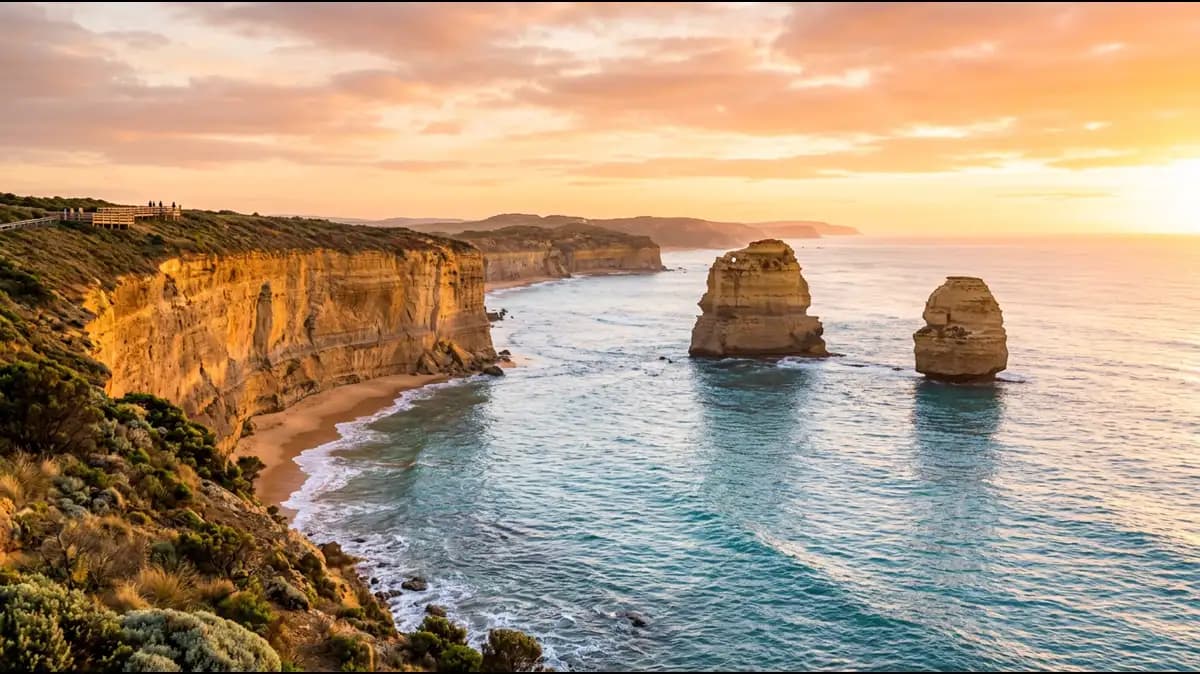
The Twelve Apostles at sunrise — worth the early start
1-Day Itinerary — The Sprint
Melbourne → Twelve Apostles → Melbourne | ~12 hours | 550 km return
Honestly? One day is tight. You'll spend 5-6 hours driving and have about 6 hours for stops. It's doable if you leave early, skip the detours, and accept you're seeing the highlights rather than experiencing the road. Here's how to make it work.
6:30 AM — Leave Melbourne
Take the M1 to Geelong, then the Surf Coast Highway to Torquay. Stop at the Great Ocean Road Memorial Arch for the obligatory photo — it takes 5 minutes and there's a car park right there.
8:30 AM — Bells Beach
Quick stop at the lookout. If the surf is on, you might see some of Australia's best surfers. The car park has a toilet. 10 minutes here is enough unless you want to walk down to the sand.
Multiple public toilets along the foreshore, at Surf World Museum, and at Bells Beach car park.
9:30 AM — Drive through Anglesea & Aireys Inlet
The Split Point Lighthouse at Aireys Inlet is worth a 15-minute stop if you're ahead of schedule. Otherwise, enjoy the coast road and keep moving.
10:00 AM — Lorne
Grab a coffee on Mountjoy Parade. If you have 30 minutes spare, walk to the Erskine Falls car park (10 min drive inland) — it's a short walk to a beautiful waterfall. On a one-day trip, this might be the stop you skip to save time.
Public toilets at the main beach car park, Loutit Bay foreshore, and at the start of the Erskine Falls walk.
11:00 AM — Kennett River Koalas
Pull into the Kennett River car park, walk 50 metres up the Grey River Road, and look up. You'll almost certainly see wild koalas in the gum trees. This is one of the most reliable koala spotting locations in Victoria and it's completely free. 15-20 minutes.
12:00 PM — Apollo Bay — Lunch
This is your lunch stop. The Apollo Bay Fishermen's Co-op does the best fish and chips on the coast — crayfish if you're feeling flush. Eat on the harbour wall. Allow 45 minutes.
Public toilets at the harbour, foreshore reserve, and Recreation Reserve. Wheelchair accessible facilities at the foreshore.
1:30 PM — Inland through the Otways
The road heads inland after Apollo Bay through the Great Otway National Park. Stunning rainforest driving — tree ferns, mountain ash, and the occasional lyrebird. The road climbs and twists for about 60 km until you reach the coast again at Princetown.
2:30 PM — Twelve Apostles
The main event. The visitor centre car park is well signed — walk through the tunnel under the road and you're at the viewing platforms. The afternoon light is good for photos (morning is even better if you're doing a multi-day trip). Allow 30-45 minutes to see both viewing platforms.
Tip: Walk to the far end of the boardwalk — most people cluster at the first platform and miss the better views further along.
3:15 PM — Loch Ard Gorge
Five minutes drive from the Twelve Apostles. The gorge is named after the Loch Ard, a clipper ship that wrecked here in 1878 — only two survivors. Walk down to the beach (it's steep but short) and then do the Razorback and Island Archway walks. 30-40 minutes total.
4:00 PM — London Arch (optional)
If you have time, it's another 10 minutes west. The arch collapsed in 1990 (it was London Bridge) stranding two tourists on the seaward side — they had to be rescued by helicopter. Quick stop, good photo, and then start the drive back.
4:30 PM — Head back to Melbourne
Don't drive back the way you came — take the inland route via Colac and the Princes Freeway. It's faster (about 3 hours) and you've already seen the coast. You'll be back in Melbourne by 7:30 PM.
Fuel Warning
Fill up in Colac or Apollo Bay. The stretch from Apollo Bay to Port Campbell has no fuel stops — that's about 90 km of winding road through the Otways.
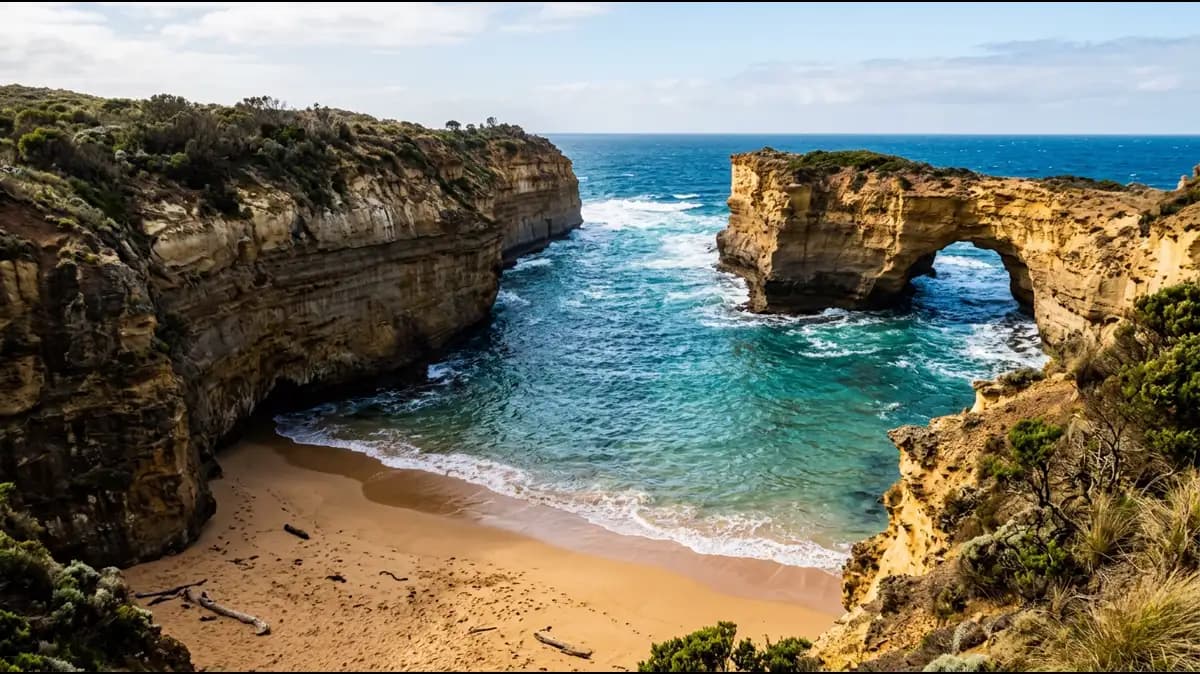
Loch Ard Gorge — named after the 1878 shipwreck with only two survivors
2-Day Itinerary — The Weekender
Day 1: Melbourne → Apollo Bay | Day 2: Apollo Bay → Twelve Apostles → Melbourne
Two days is the minimum I'd recommend. You get to actually stop and enjoy places rather than just photographing them through the car window. Stay overnight in Apollo Bay or Lorne.
Day 1 — Melbourne to Apollo Bay (190 km, 3.5 hours driving)
Leave Melbourne by 8 AM. Follow the one-day route but take your time — you're not racing to the Twelve Apostles today. Add these stops:
- Torquay foreshore — Walk the beach, visit Surf World Museum if you're into surf history
- Anglesea golf course — Wild kangaroos graze on the fairway. Pull into the car park and walk along the fence
- Teddy's Lookout above Lorne — Panoramic views of the coast. Short walk from the car park
- Erskine Falls — 20-minute detour from Lorne. Walk down 230 steps to the base of the falls (and back up — your legs will know about it)
- Kennett River koalas — Same as above, don't miss it
- Apollo Bay — Arrive mid-afternoon. Walk the harbour, eat fish and chips, watch the sunset from the foreshore
Public toilets at the main beach, riverbank, and at the Anglesea Memorial Hall car park.
Where to Stay — Night 1
Apollo Bay is the best base. Budget: Apollo Bay YHA or Eco Beach Caravan Park ($30-45/night for a powered site). Mid-range: Apollo Bay Waterfront Motor Inn. Splurge: Chris's Beacon Point Restaurant & Villas (the views are unreal). Book ahead in summer — Apollo Bay fills fast.
If Apollo Bay is full, try Lorne — more dining options and the Great Ocean Road Cottages are excellent value.
Day 2 — Apollo Bay to Twelve Apostles & back to Melbourne
Leave Apollo Bay by 8 AM. Head through the Otways to the Twelve Apostles — you'll arrive around 9:30 AM before the tour buses. This is the best time for photos.
- Twelve Apostles — Arrive early, take your time. 45 minutes.
- Loch Ard Gorge — Walk to the beach, do the Razorback walk. 30 minutes.
- The Grotto — Often missed because people rush past. It's a natural rock pool 5 minutes past Loch Ard. 10 minutes.
- London Arch — Quick stop. 10 minutes.
- Port Campbell — Coffee or early lunch. Small town, nice vibe.
- Drive back to Melbourne — Inland via Colac and Princes Freeway. About 3 hours.
Public toilets in the town centre car park. Also facilities at the Twelve Apostles and Loch Ard Gorge car parks.
3-Day Itinerary — The Sweet Spot
Day 1: Melbourne → Lorne | Day 2: Lorne → Apollo Bay → Otways | Day 3: Otways → Twelve Apostles → Warrnambool → Melbourne
Three days is what I tell everyone to do. You get time to walk in the Otways, eat properly at every town, catch a sunset at the Twelve Apostles, and still make it back to Melbourne without feeling rushed.
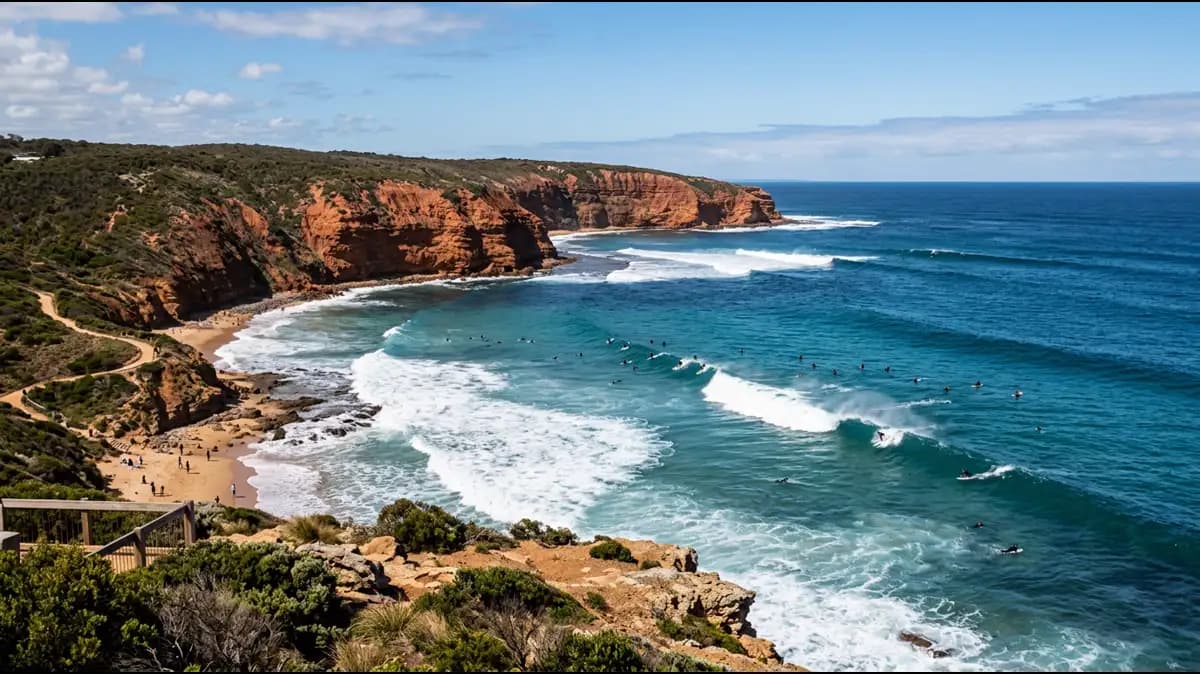
Bells Beach — home of the Rip Curl Pro

Wild koalas at Kennett River — look up!
Day 1 — Melbourne to Lorne (140 km, 2.5 hours driving)
No need to rush today. Leave Melbourne by 9 AM.
- Torquay — Walk the foreshore, breakfast at Bomboras cafe. Surf lesson if you're keen (2 hours, from $70)
- Bells Beach — Lookout and walk
- Anglesea — Kangaroos on the golf course, beach walk
- Aireys Inlet — Split Point Lighthouse walk (30 min loop)
- Lorne — Arrive mid-afternoon. Walk the pier, browse the shops on Mountjoy Parade, swim at the main beach. Dinner at Lorne Hotel or Swing Bridge Cafe.
Public toilet at the Fairhaven Surf Life Saving Club car park and at the Split Point Lighthouse reserve.
Where to Stay — Night 1 (Lorne)
Budget: Great Ocean Road Backpackers or Erskine River Camping. Mid-range: Great Ocean Road Cottages. Splurge: Mantra Lorne — right on the beach.
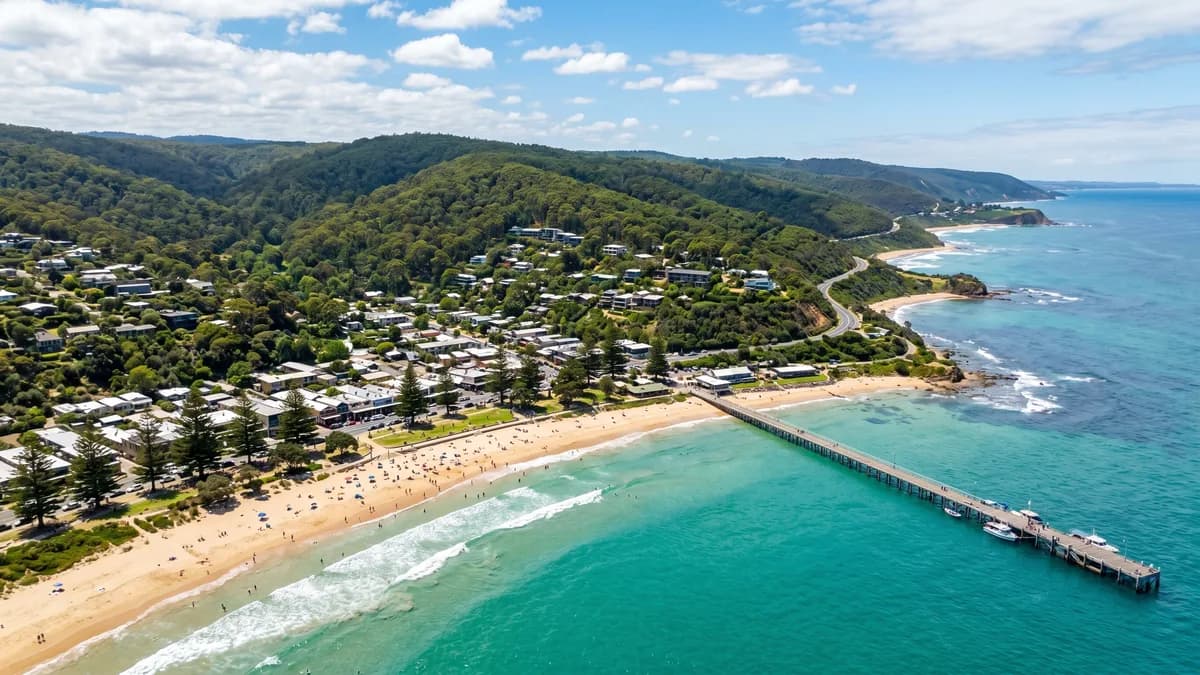
Lorne — the liveliest town on the Great Ocean Road
Day 2 — Lorne to Apollo Bay via the Otways (80 km, 2 hours driving + walks)
This is the day most people miss on a shorter trip — and it's my favourite part of the whole road.
- Erskine Falls — If you didn't do it yesterday. Go early (8 AM) and you'll have it to yourself
- Kennett River koalas — Still unmissable
- Cape Otway Lightstation ($20 adult) — Australia's oldest surviving lighthouse. Wild koalas in the car park too
- Otway Fly Treetop Adventures ($30 adult) — Walk 25 metres above the rainforest canopy. Zipline if you're brave
- Triplet Falls — This is the hidden gem. A 2 km loop walk through fern gullies and old-growth forest to three waterfalls. Most people skip it because it's a 15-minute drive off the main road. Don't skip it.
- Apollo Bay — Arrive late afternoon. Fish and chips at the Co-op, sunset walk
Basic public toilet behind the Kennett River car park. No other facilities between Lorne and Apollo Bay — plan ahead.
Where to Stay — Night 2 (Apollo Bay)
Same options as the 2-day itinerary. If you're campervanning, the Big4 Apollo Bay Pisces Holiday Park has powered sites with dump point access.
Day 3 — Apollo Bay to Twelve Apostles to Warrnambool (160 km driving)
Leave by 7 AM to hit the Twelve Apostles at sunrise (or close to it). Seriously — sunrise at the Twelve Apostles with nobody else there is worth the early start.
- Twelve Apostles at sunrise — Magic. The light hits the limestone and turns it gold.
- Loch Ard Gorge — All the walks. The beach, the Razorback, Island Archway, the Blow Hole
- The Grotto, London Arch, The Arch — Knock these off in an hour
- Bay of Islands — Less famous than the Twelve Apostles but arguably more beautiful. It's a few km past Peterborough
- Port Campbell — Lunch at 12 Rocks cafe
- Warrnambool (optional extension) — If it's whale season (June-September), the whale viewing platform at Logan's Beach is incredible. Southern right whales come right into the bay to calve
- Drive to Melbourne — Inland via the Princes Highway (2.5-3 hours)
Multiple public toilets: Lake Pertobe, Flagstaff Hill, CBD, and at Logan's Beach whale viewing platform.
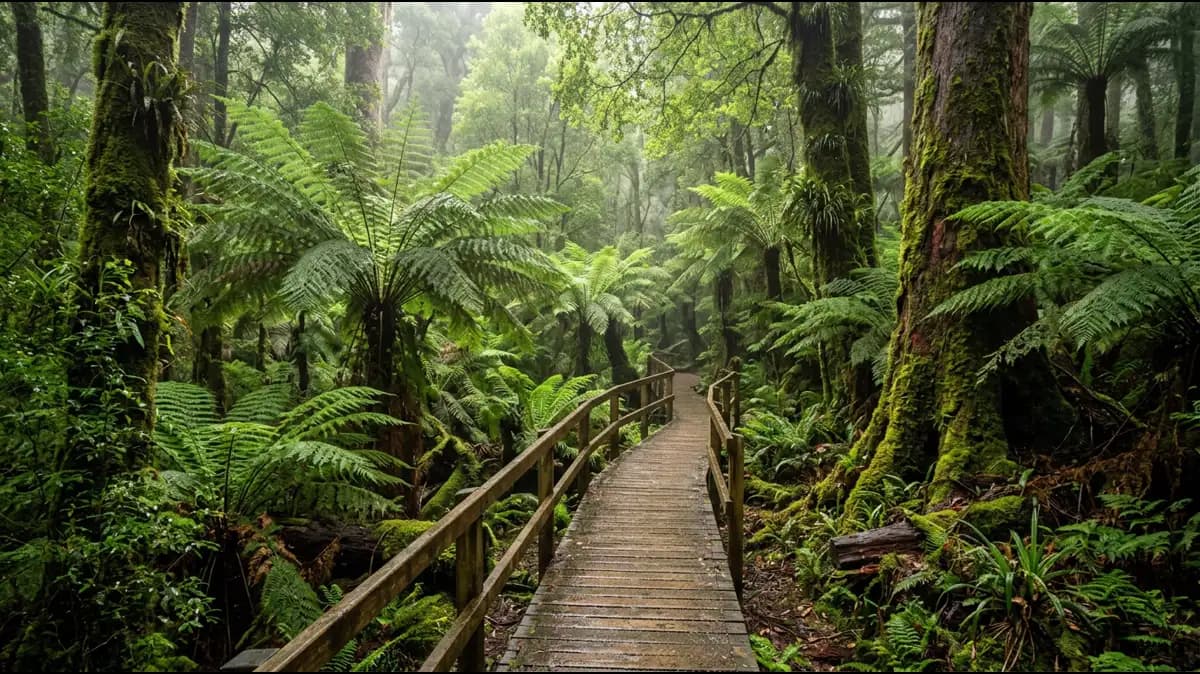
The Otway rainforest — most people skip this and it's the best part
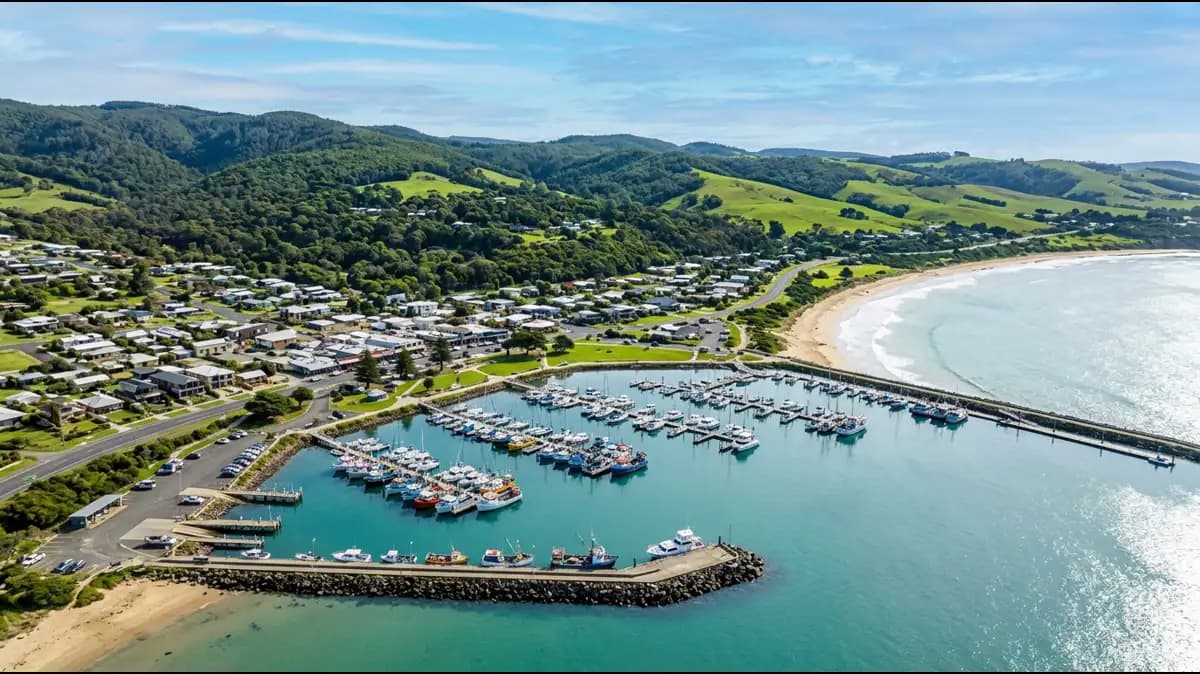
Apollo Bay — your best base for nights 1 or 2
5-Day Itinerary — The Full Experience
The full coast — Melbourne to Warrnambool and beyond, at a pace where you actually enjoy it.
Five days lets you do everything the three-day itinerary covers plus add in the western section, Port Fairy, Tower Hill, and enough time to take a surf lesson, do a food tour, or just sit on a beach and read a book.
5-Day Overview
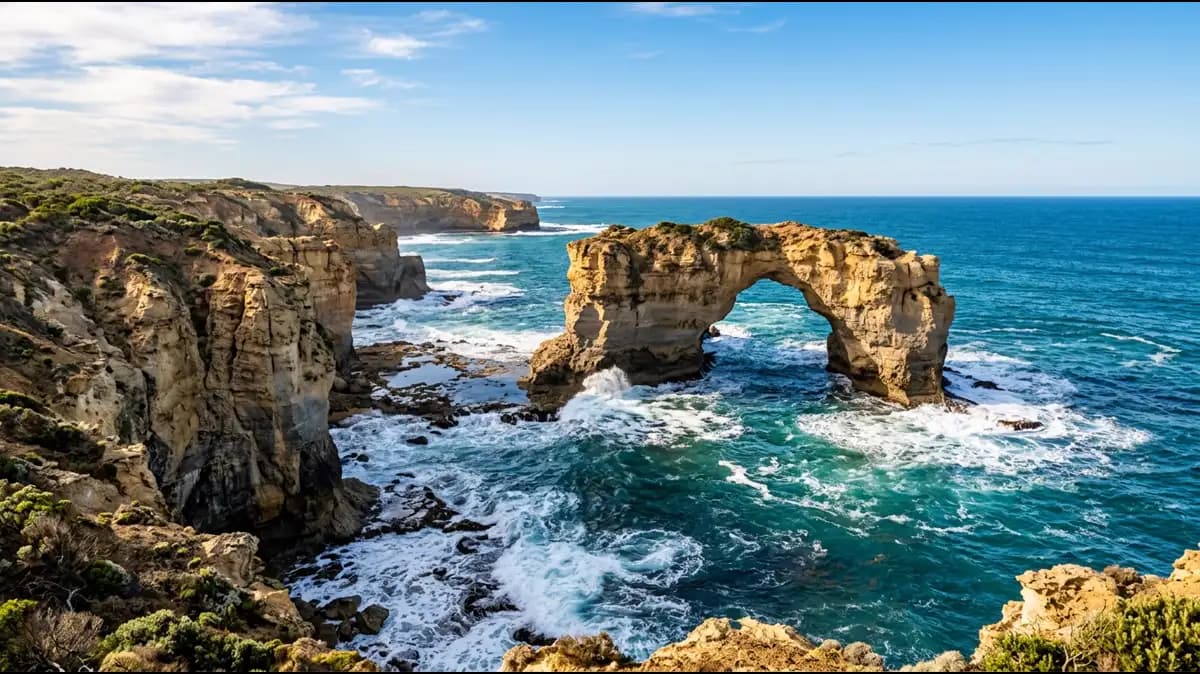
London Arch — it collapsed in 1990 stranding two tourists
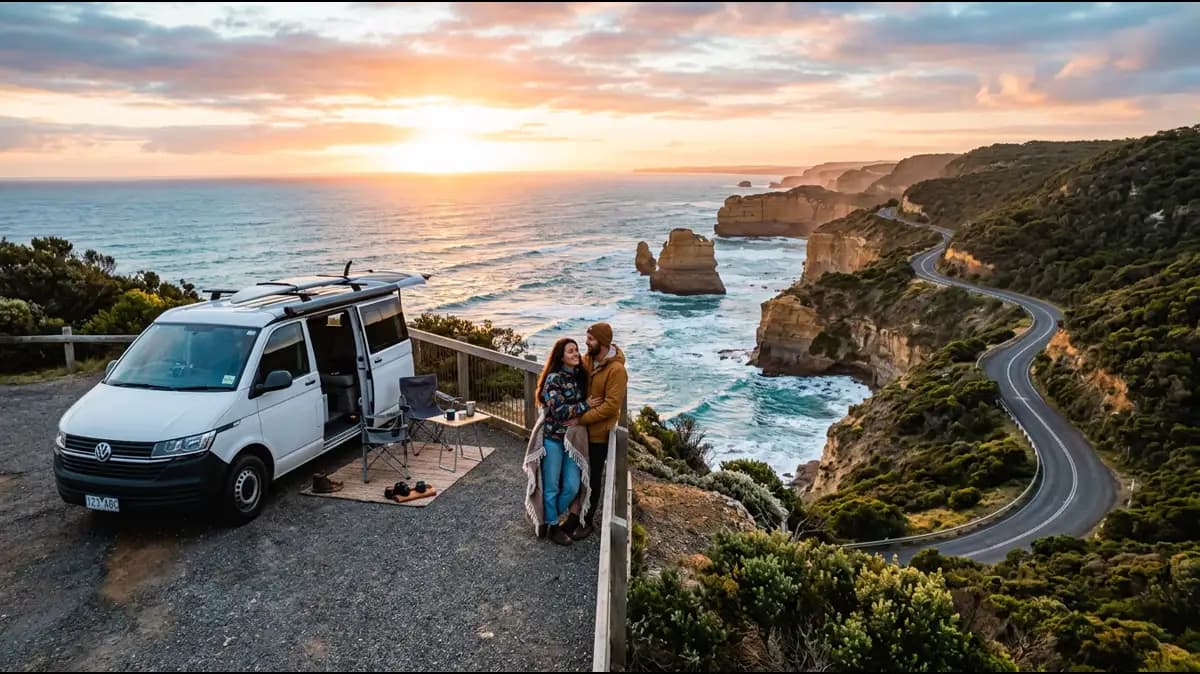
Campervan life on the Great Ocean Road
Day 4 additions — the western end most people miss
Most visitors turn around at the Twelve Apostles. Keep driving west and the crowds disappear.
- Bay of Islands Coastal Park — Fewer people, equally stunning sea stacks. The cliff walk here is beautiful
- Tower Hill Wildlife Reserve — A volcanic crater turned nature reserve, 15 minutes from Warrnambool. Free entry, wild emus and koalas, Aboriginal cultural walks. Underrated.
- Warrnambool — Bigger town than you expect. Flagstaff Hill Maritime Village ($20 adult) tells the shipwreck stories. Great pub meals.
- Port Fairy — One of Australia's most charming small towns. Stone cottages, fishing fleet, Griffiths Island walk (1 hour loop, penguins at dusk). Stay the night.
Public toilets at the wharf, at the Griffiths Island car park, and in the town centre near the visitor information centre.
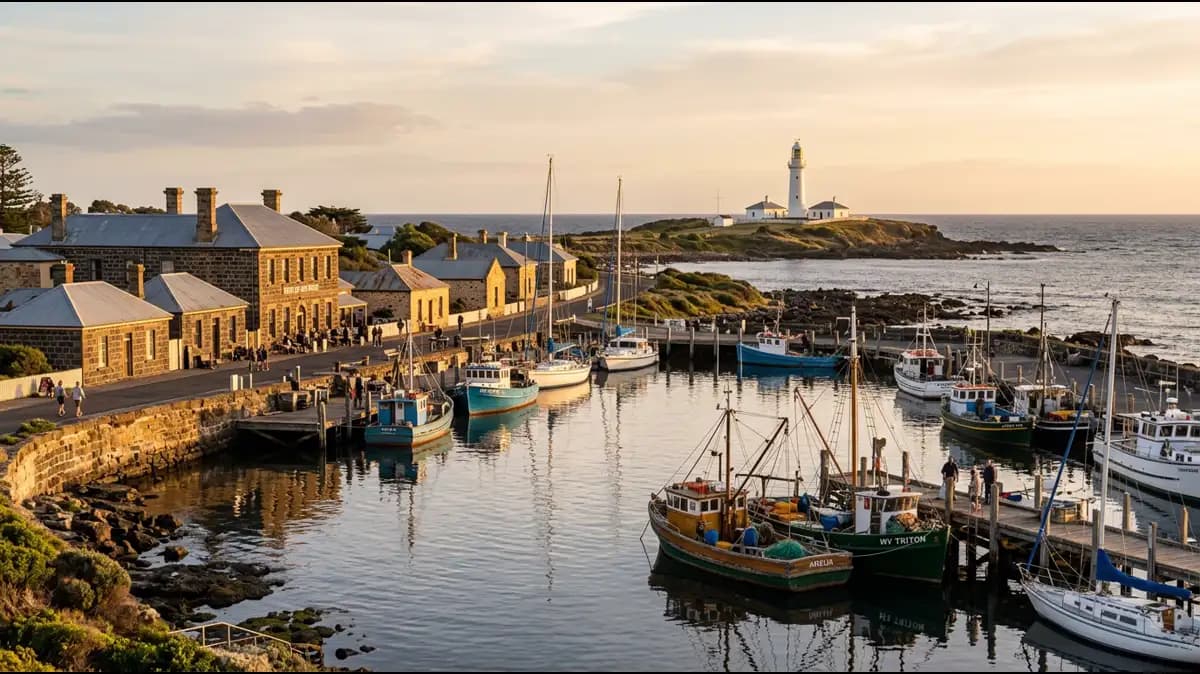
Port Fairy — one of Australia's most charming small towns
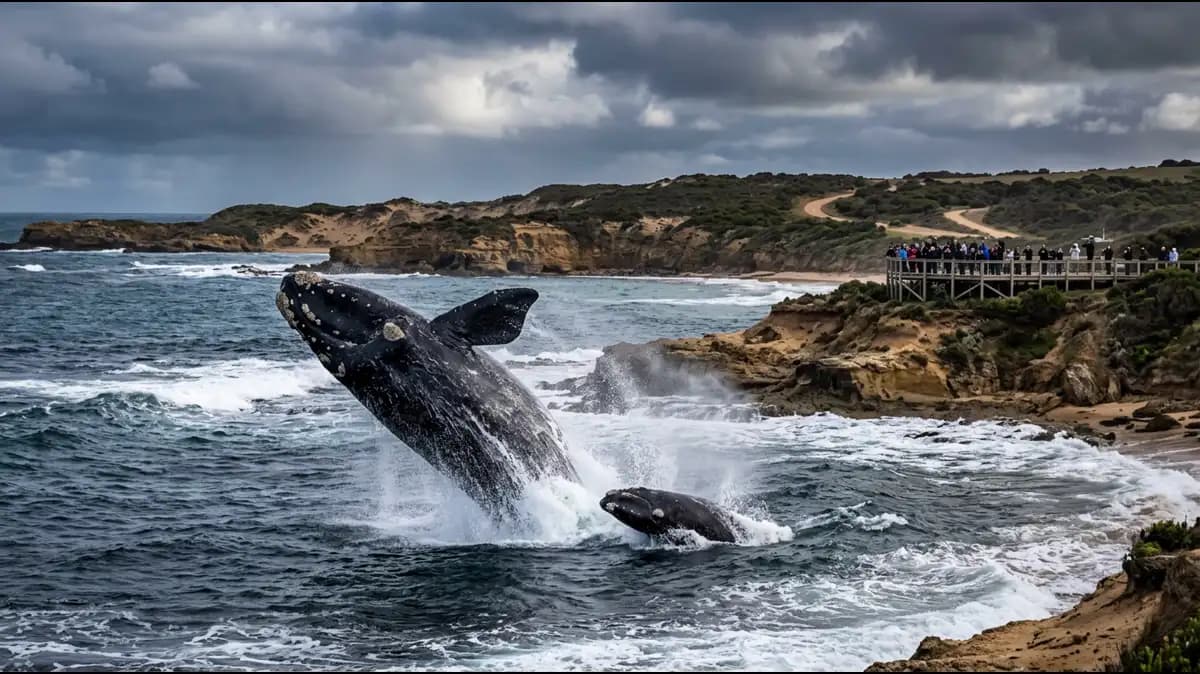
Southern right whales at Warrnambool (June–September)
Where to Eat Along the Great Ocean Road
The food scene on the GOR has come a long way. You can still get a servo pie (and sometimes that's exactly what you want), but there's also genuinely excellent food if you know where to stop.
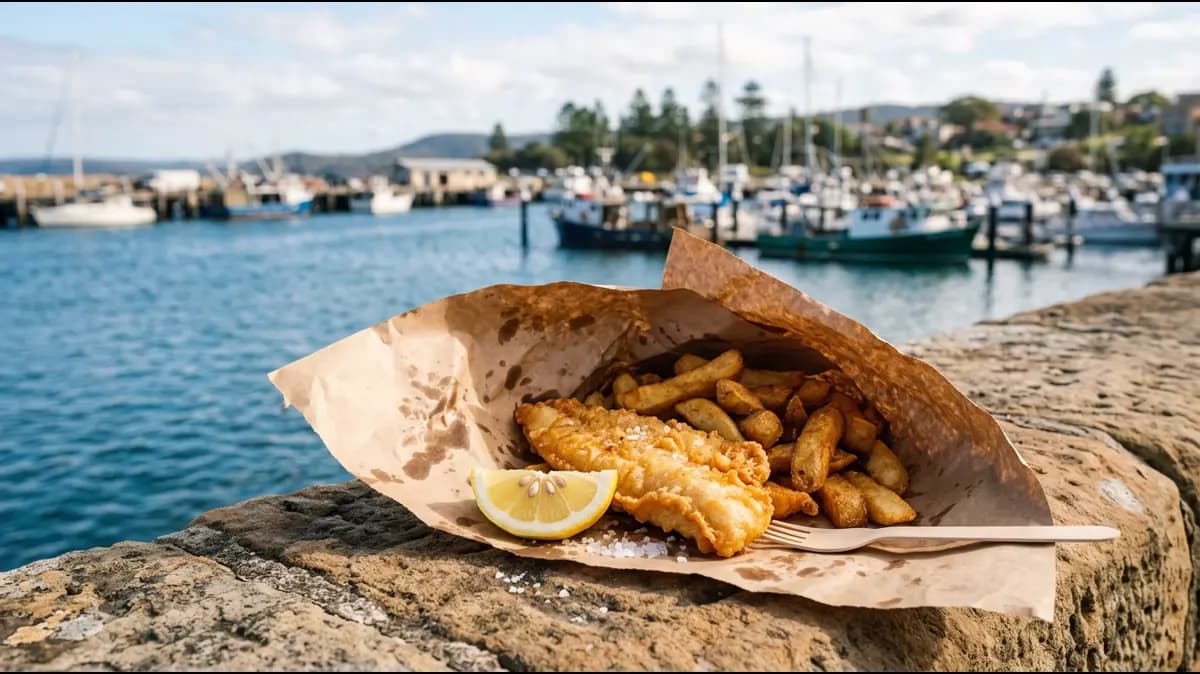
Fish and chips on the harbour wall — the Great Ocean Road experience
Bomboras, Torquay
Best breakfast on the coast. The eggs benny with house-made hollandaise is ridiculous. Gets busy after 9 AM on weekends.
Swing Bridge Cafe, Lorne
Coffee and brunch on the river. Try the corn fritters. The bridge setting is lovely — outdoor tables overlooking the Erskine River.
Apollo Bay Fishermen's Co-op
The fish and chips here are legendary. Fresh off the boats. Get the flathead or go big with the crayfish. Eat on the harbour wall.
Chris's Beacon Point, Apollo Bay
Fine dining with a view. If you're doing the 3 or 5-day trip, treat yourself to dinner here. The degustation is excellent.
12 Rocks, Port Campbell
Good coffee, excellent lunch spot. The lamb burger is great. Nice outdoor area. Fills up quick at lunchtime.
Merrijig Kitchen, Port Fairy
Modern Australian in an old stone building. Local produce, seasonal menu. Great wine list. Worth booking ahead.
Where to Stay
Your main overnight options are Lorne, Apollo Bay, Port Campbell, and Warrnambool/Port Fairy. In summer (December-February), book at least 2-3 weeks ahead — these towns are small and they fill up.
| Town | Budget ($30-80) | Mid-Range ($100-200) | Splurge ($200+) |
|---|---|---|---|
| Lorne | Erskine River Caravan Park | Great Ocean Road Cottages | Mantra Lorne |
| Apollo Bay | YHA / Big4 Pisces | Waterfront Motor Inn | Chris's Beacon Point Villas |
| Port Campbell | Port Campbell Hostel | Southern Ocean Villas | Sea Foam Villas |
| Port Fairy | Big4 Port Fairy | Comfort Inn | Drift House |
Camping & campervans: Free camping at Johanna Beach (no facilities) and Aire River (basic toilet, no showers). Powered caravan parks in every town — expect $35-55/night for a powered site in peak season. Dump points at Apollo Bay Recreation Reserve and Port Campbell.
Every Toilet Stop on the Great Ocean Road
This is why Dunny Dash exists. Here's every town along the route where you'll find a public loo, with links to the full facility details on each page.
Starting point — multiple facilities
Foreshore, Surf World, Bells Beach
Main beach & riverbank
Fairhaven SLSC & lighthouse
Beach, Loutit Bay, Erskine Falls
Basic facility at car park
Harbour, foreshore, recreation reserve
Town centre & Twelve Apostles car park
Lake Pertobe, CBD, Logan's Beach
Wharf, Griffiths Island, town centre
Longest Gap Without Facilities
The stretch between Lavers Hill and Port Campbell (about 45 minutes driving through the Otways) has no public toilets. Plan accordingly — use the facilities at Apollo Bay or the Otway Fly before this section.
Local Tips
Weather
The GOR has its own weather system. Pack layers even in summer — the wind at the lookouts can be brutal. I've worn a puffer jacket at the Twelve Apostles in January.
Fuel
Fill up in Geelong (cheapest), Colac, or Apollo Bay. Fuel at Lorne and Port Campbell is 15-20% more expensive. The Apollo Bay → Port Campbell stretch has no fuel for 90 km.
Photography
Sunrise at the Twelve Apostles is the money shot. Sunset at the Razorback near Loch Ard is equally good and less crowded. Golden hour at Gibson Steps is stunning.
Dogs
Dogs are allowed on-lead at most beaches but NOT in the national parks (no Otways walks, no Twelve Apostles lookouts). Torquay and Anglesea have off-lead dog beaches.
Driving
Speed limit is 80 km/h for most of the road, 50-60 in towns. Police are active — especially on holiday weekends. Use the pull-over bays to let faster traffic pass. Left-hand drive.
Phone Signal
Telstra has the best coverage. You'll lose signal between Lorne and Apollo Bay and through parts of the Otways. Download offline maps before you leave Melbourne.
Frequently Asked Questions
How many days do you need to drive the Great Ocean Road?
You can drive the Great Ocean Road in a single long day (10-12 hours Melbourne to Warrnambool), but 2-3 days is the sweet spot. Three days lets you stop at every major lookout, walk to a waterfall, eat properly, and not feel rushed. Five days is ideal if you want to hike in the Otways, explore side roads, or just slow down and enjoy the coast.
Is it better to stay in Apollo Bay or Lorne?
Lorne is livelier with more restaurants, a pub, and a cinema. Apollo Bay is quieter and closer to the Twelve Apostles and the Otway rainforest. If you only have one night, Apollo Bay gives you a better base for day two. If you have two nights, stay one in each.
Can you drive the Great Ocean Road in a campervan?
Yes, and it is one of the best ways to do it. The road is sealed and well-maintained. Standard campervans (under 3m tall) fit everywhere. There are free camping spots at Johanna Beach and Aire River, plus powered sites at every major town. Fill up on fuel in Colac or Apollo Bay — the gap between servos can catch you out.
What should you not miss on the Great Ocean Road?
The Twelve Apostles at sunrise or sunset (avoid midday crowds), Loch Ard Gorge, the Otway Fly Treetop Walk, the wild koalas at Kennett River, Bells Beach, and the fish and chips at Apollo Bay Fishermen's Co-op. If you have time, add the Triplet Falls walk in the Otways — it is one of Victoria's best short walks and most people skip it.
Where are the public toilets on the Great Ocean Road?
There are public toilets at every major town (Torquay, Anglesea, Lorne, Apollo Bay, Port Campbell, Warrnambool) and at most lookout car parks including the Twelve Apostles, Loch Ard Gorge, and the Memorial Arch. The longest gap without facilities is the stretch between Lavers Hill and Port Campbell (about 45 minutes). Dunny Dash maps every public toilet along the route.
Is the Great Ocean Road free to drive?
Yes. There are no tolls on the Great Ocean Road itself. The only costs are fuel, food, accommodation, and optional paid attractions like the Otway Fly ($30 adult), Cape Otway Lightstation ($20 adult), and the Twelve Apostles helicopter rides (from $145). Parking at all lookouts is free.
What is the best time of year to drive the Great Ocean Road?
November to March for the best weather (20-28°C), though summer weekends are busy and accommodation books out. April-May is ideal — warm enough to enjoy the coast, fewer crowds, autumn colours in the Otways. June to August is whale watching season at Warrnambool and the cheapest for accommodation, but expect rain and cold winds at the lookouts.
More Australian Travel Guides
Planning a longer trip? Check out our other itineraries.
Driven the Great Ocean Road?
Got a tip I've missed? Know a toilet stop that's closed or a new one that's opened? Let me know and I'll update this guide.