Public Toilets in Darwin, NT
20 public toilets mapped across Darwin — the tropical capital that's been bombed by Japan and flattened by a cyclone, then had the audacity to rebuild twice and throw a sunset market. You can't swim at the beach (crocs), but you can find a dunny from the Waterfront to Mindil Beach. Welcome to the Top End.
Interactive Toilet Map
20 facilities available in Darwin
Where Are You?
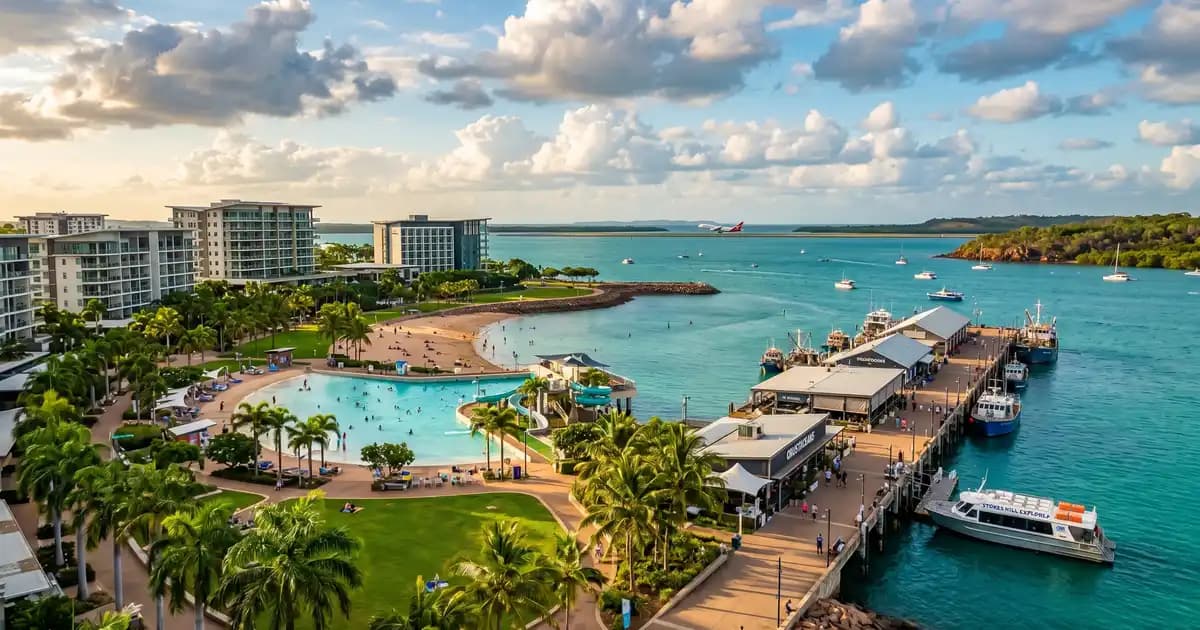
At the Waterfront Precinct
4 toilet blocks + Stokes Hill Wharf
Waterfront has the wave lagoon, recreation lagoon (croc-free swimming!), restaurants.
You can't swim at Darwin beaches (crocs + jellyfish), so the Waterfront lagoons are essential. Multiple toilet blocks across the precinct.
Mindil Beach Sunset Markets
Mindil Beach toilet
Thursday and Sunday evenings (dry season). 30+ nationalities of food stalls.
The quintessential Darwin experience — sunset, food, craft. One toilet facility at the beach. Markets run Apr-Oct, Thu & Sun.
East Point Reserve
3-block facility (M/F/Unisex)
All wheelchair accessible, flush. WWII military history museum.
Best-equipped toilet facility in Darwin. East Point has the WWII gun emplacements, tunnel complex, Lake Alexander (safe swimming), and wallabies at dusk.
In the CBD / Mitchell Street
Multiple CBD blocks
4 blocks around Smith Street Mall, Knuckey Street, Mitchell Street.
Smith Street Mall, Mitchell Street (backpacker strip), Crocosaurus Cove. Multiple toilet options. Aboriginal Bush Traders cafe is a great social enterprise.
At MAGNT / Fannie Bay
Fannie Bay blocks
Near the Museum and Art Gallery of the Northern Territory.
MAGNT has the Cyclone Tracy Gallery — stand in a dark room and hear the actual recorded sound of the cyclone. Deeply moving. Toilet nearby.
Stokes Hill Wharf
Stokes Hill Wharf toilet
Wheelchair accessible + baby change. Fish & chips at sunset.
Long wharf into Darwin Harbour. Kim's Fish & Chips, Red Dragon. Sunset views. The wharf was damaged in the 1942 bombing.
Tropical Toilet Tips
Darwin's tropical climate means a few things work differently up here.
Crocodiles
Saltwater crocs inhabit waterways and coastal areas. Heed all warning signs near water. Facilities near creeks may have croc warning signs.
Stinger Season (Nov-May)
Box jellyfish in coastal waters. Swimming restricted to lagoons and stinger nets. Toilet demand concentrates at safe swimming spots.
Wet Season (Nov-Apr)
Monsoon rains, cyclone risk, extreme humidity. Some facilities near waterways may flood. Build-up (Oct-Dec) is oppressive heat + humidity.
Dry Season (May-Oct)
Tourist season. Clear skies, warm days, cool nights. All facilities operational. Mindil Beach Markets run Thu & Sun evenings.
Bombed More Than Pearl Harbor, Then Flattened by a Cyclone
Larrakia country (Garramilla). Darwin has been destroyed and rebuilt twice — by Japanese bombs in 1942 and by Cyclone Tracy on Christmas Eve 1974. No other Australian city carries this weight of history.
The Bombing of Darwin (19 Feb 1942)
188 Japanese aircraft attacked at 9:58am — led by Commander Fuchida, the same man who led the attack on Pearl Harbor 10 weeks earlier. More bombs were dropped on Darwin than on Pearl Harbor.
235 killed, 8 ships sunk, 23 aircraft destroyed. Darwin was bombed 64 times during WWII. The government suppressed the true death toll for decades.
Visit: Darwin Military Museum at East Point. Fort Hill lookout. WWII oil storage tunnels (Burnett House).
Cyclone Tracy (Christmas Eve 1974)
Tracy crossed the coast between midnight and 7am on Christmas Day. Winds estimated at 250-300 km/h (the anemometer broke at 217). Over 70% of buildings destroyed. 71 killed.
41,000 of 47,000 residents evacuated — the largest evacuation in Australian history. The city was rebuilt from scratch with strict cyclone codes.
Visit: MAGNT Cyclone Tracy Gallery — hear the actual recorded sound of the cyclone in a darkened room.
Things to Do
Mindil Beach Sunset Markets
30+ nationalities of food. Thu & Sun evenings, dry season (Apr-Oct). Watching the sunset is unforgettable.
Crocosaurus Cove
World's largest display of Australian reptiles. 'Cage of Death' — lowered into the croc enclosure. CBD.
MAGNT
Museum & Art Gallery of the NT. Cyclone Tracy Gallery, Sweetheart (5.1m stuffed croc), Aboriginal art. Free.
Darwin Waterfront
Wave lagoon, recreation lagoon (safe swimming), restaurants. Built because you can't swim at the beach.
East Point Reserve
WWII gun emplacements, Lake Alexander (safe swimming), wallabies at dusk. Best toilet facilities in Darwin.
Litchfield NP (1.5hr)
Magnetic termite mounds, waterfalls (Florence, Wangi, Buley Rockhole). Popular swimming holes.
Kakadu NP (3hr)
World Heritage. Aboriginal rock art at Ubirr (20,000+ years). Yellow Water cruise. Jim Jim Falls.
Stokes Hill Wharf
Fish & chips at sunset over Darwin Harbour. Damaged in the 1942 bombing, rebuilt. War history.
Where to Stay in Darwin
Darwin's accommodation ranges from Mitchell Street backpackers to Waterfront luxury. Every neighbourhood has a mapped dunny nearby — and in the build-up, air-conditioning is non-negotiable.
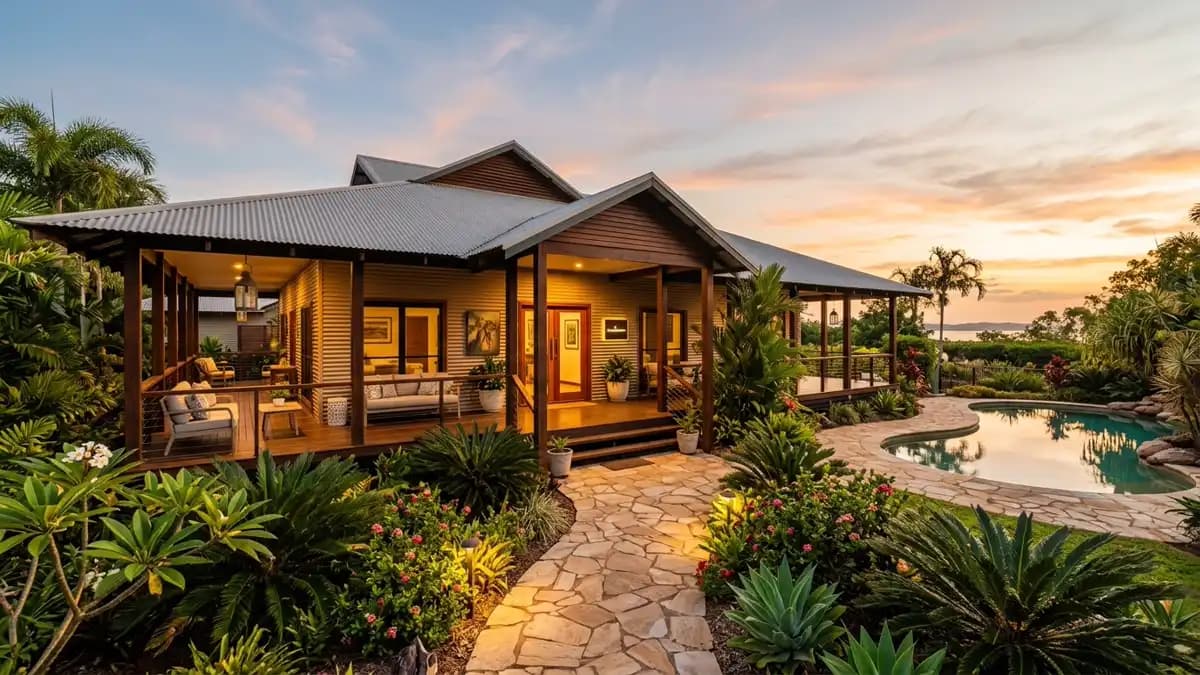
Darwin Waterfront
Premium spot. Modern apartments and hotels overlooking the wave lagoon. Walk to Stokes Hill Wharf for sunset fish and chips. Safe swimming (the lagoon is croc-free — guaranteed).
Nearest dunnies: 4 Waterfront blocks + Stokes Hill Wharf (wheelchair, baby change).
CBD / Mitchell Street
Backpacker strip turned dining precinct. Budget hostels to mid-range hotels. Walking distance to everything. Crocosaurus Cove is literally on Mitchell Street.
Nearest dunnies: 4 CBD blocks (3 wheelchair accessible), all free.
Fannie Bay / East Point
Quieter, leafy, near MAGNT and Botanic Gardens. Lake Alexander for safe swimming. Wallabies at dusk. Mindil Beach Markets a 5-min drive.
Nearest dunnies: East Point 3-block facility (best in Darwin — all wheelchair, flush), MAGNT area, Mindil Beach.
Hotels & Bed and Breakfasts in Darwin
Darwin has waterfront hotels, backpacker hostels, and suburban motels. The dry season (May-October) is busy — prices spike.
| Property | Type | Rooms | Ensuite Bathroom | Notes |
|---|---|---|---|---|
| Hilton Darwin | Hotel | 235 rooms | Yes — modern ensuites | On the Esplanade overlooking the harbour. Pool, restaurant. The premium CBD option. |
| Adina Apartment Hotel Darwin Waterfront | Apartment hotel | 121 apartments | Yes — full bathrooms | On the Waterfront precinct. Pool, wave lagoon access. Self-contained. |
| Vibe Hotel Darwin Waterfront | Hotel | 120 rooms | Yes — modern ensuites | Waterfront location. Pool, gym. Walk to restaurants and wave lagoon. |
All listings have private bathroom facilities unless noted. Contact properties directly for accessibility requirements or specific bathroom configurations.
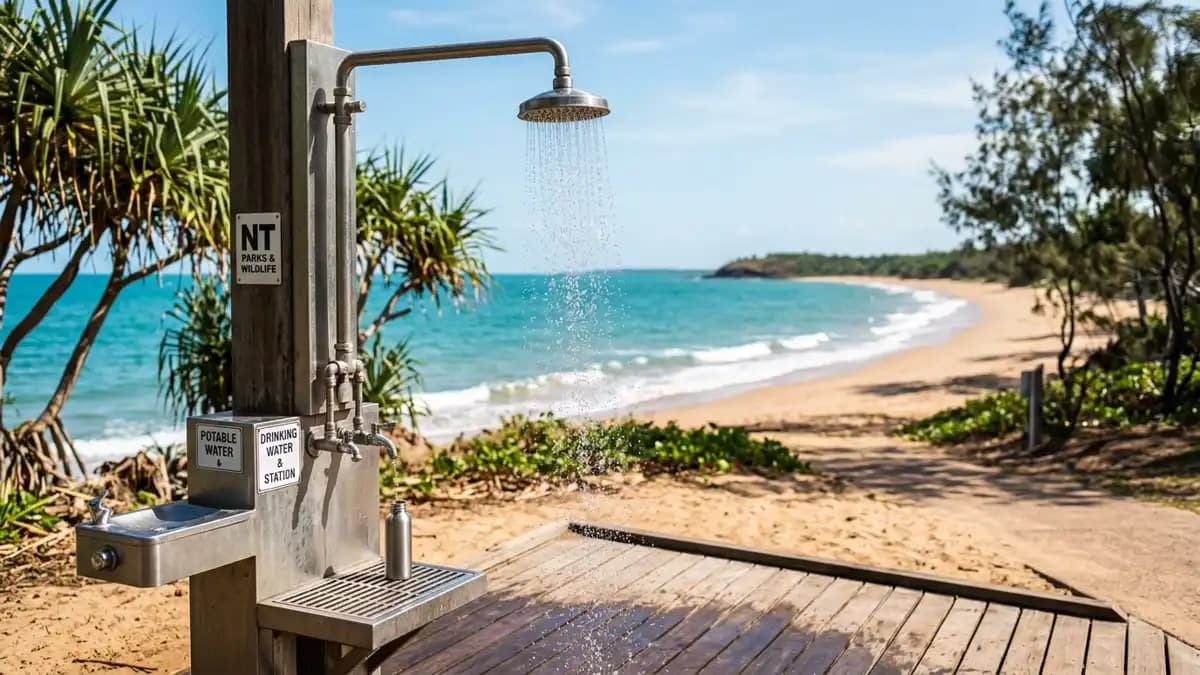
Drinking Water & Shower Facilities in Darwin
Drinking Water
| Location | Type | Notes |
|---|---|---|
| Darwin Waterfront | Drinking fountains | Multiple points along the promenade |
| Mindil Beach | Drinking fountain | Near the sunset market area |
Public Showers
| Location | Access | Notes |
|---|---|---|
| Darwin Waterfront Wave Pool | Free | Cold outdoor showers at the lagoon |
| Mindil Beach | Free | Outdoor showers near the car park |
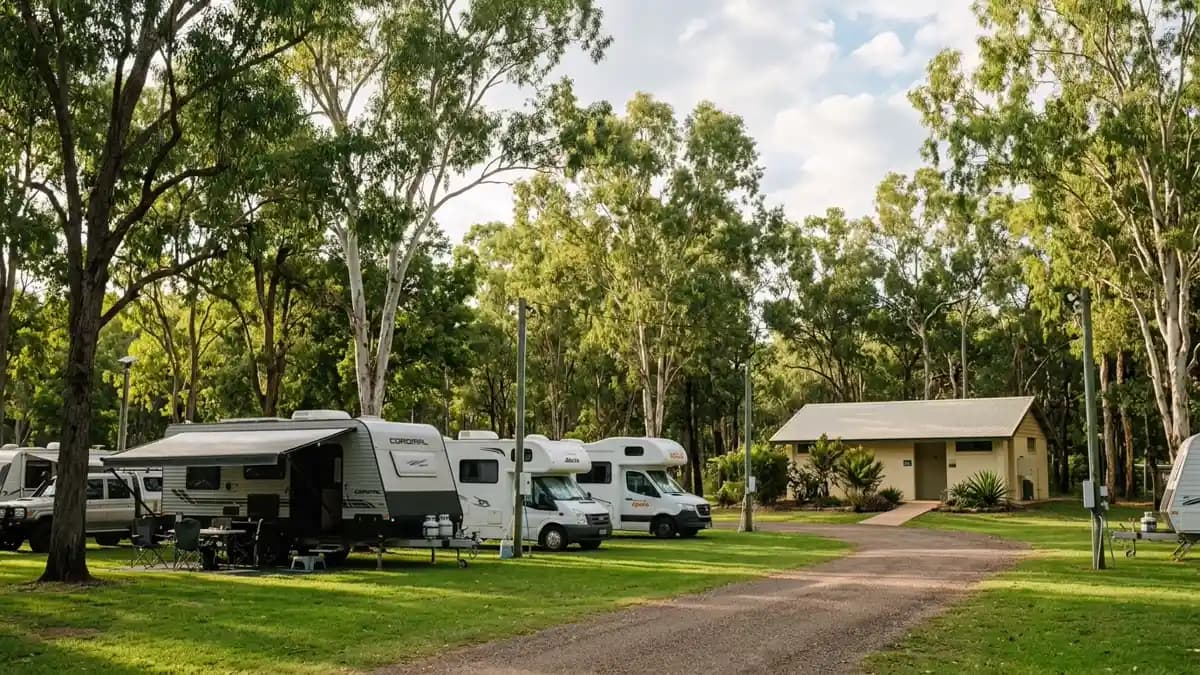
Camping & Caravan Parks in Darwin
Darwin is the northern terminus of the Stuart Highway. Grey nomads flood in during the dry season (May-October). Book ahead.
| Park | Toilets | Showers | Dump Station | Water | Power |
|---|---|---|---|---|---|
| BIG4 Howard Springs Holiday Park | Yes | Yes | Yes | Yes | Yes |
| Coolalinga Caravan Park | Yes | Yes | Yes | Yes | Yes |
| Hidden Valley Holiday Park | Yes | Yes | Yes | Yes | Yes |
- BIG4 Howard Springs Holiday Park: 30 minutes south. Pool, water park, mini golf. Near Howard Springs Nature Park.
- Coolalinga Caravan Park: 25 minutes south on the Stuart Highway. Pet-friendly. Large drive-through sites.
- Hidden Valley Holiday Park: Closest to the CBD. 10 minutes from the waterfront. Pool, camp kitchen.
Frequently Asked Questions
How many public toilets are in Darwin?
20 mapped locations across the Darwin CBD, Waterfront Precinct, The Esplanade, East Point Reserve, and Mindil Beach. 9 have confirmed wheelchair access. All are free.
Can you swim at Darwin beaches?
Not safely in the ocean — saltwater crocodiles and box jellyfish make ocean swimming dangerous year-round. Use the Darwin Waterfront wave lagoon and recreation lagoon (croc-free guaranteed) or the East Point Lake Alexander pool instead.
When is the best time to visit Darwin?
The dry season (May-October) is best — clear skies, warm days, low humidity, no cyclone risk. The wet season (November-April) brings monsoon rains, extreme humidity, cyclone risk, and some facility closures.
What happened to Darwin in WWII?
On 19 February 1942, 188 Japanese aircraft bombed Darwin — more bombs than Pearl Harbor, led by the same commander (Fuchida). 235 people were killed. Darwin was bombed 64 times during WWII.
What was Cyclone Tracy?
Cyclone Tracy struck Darwin on Christmas Eve 1974, destroying over 70% of buildings. 71 people died and 41,000 of 47,000 residents were evacuated — the largest evacuation in Australian history. The city was essentially rebuilt from scratch.
Are there crocodiles near Darwin toilets?
Saltwater crocodiles inhabit waterways, estuaries, and coastal areas around Darwin. Toilet facilities near waterways may have croc warning signs. Always heed warning signs and never swim in unmarked waterways.
Nearby Areas
Darwin is the capital of the Northern Territory. Population ~150,000. Postcode 0800. Larrakia country (Garramilla). Australia's most northern and smallest capital. Named after Charles Darwin (who never visited). Founded 1869.