Public Toilets in Cape Paterson, VIC
4 toilet locations mapped in Cape Paterson — the Bass Coast surf village where 126 million year old dinosaur fossils meet world-class rock pools. A quiet beachside community with great surf, ancient geology, and enough dunnies to keep rock-poolers and fossil-hunters comfortable.
Interactive Toilet Map
4 facilities available in Cape Paterson
Where Are You?
Cape Paterson is a small coastal settlement — everything is within walking distance. Here's the right dunny for your activity.
Surfing at the main beach
Cape Paterson Beach toilets
Near the SLSC and main car park. Best-maintained facility in town.
The main beach has a consistent beach break best for intermediate surfers. Patrolled in summer. The toilet block is right at the car park — rinse off at the outdoor showers and use the loo before heading home. Well-maintained year-round.
Dinosaur fossils / Flat Rocks
Cape Paterson Beach (start here)
Use the loo before the coastal walk to Flat Rocks fossil site.
The Flat Rocks dinosaur fossil site is accessed via the coastal walking track heading east from the main beach. It's about 1.5km each way on rocky coastline. No toilets on the track — use the main beach facilities before you start. 126 million year old fossils!
Rock pooling at low tide
Cape Paterson Beach
Rock platforms east of the main beach. Incredible marine life at low tide.
The rock platforms between the main beach and Flat Rocks are excellent for rock pooling. Anemones, crabs, starfish, and small fish. Best at low tide — check tide times. The beach toilet block is your closest facility. Allow 1-2 hours for a proper explore.
Swimming at Bay Beach (families)
Bay Beach toilets
More sheltered than the main surf beach. Better for young kids.
Bay Beach is the calmer option — more sheltered from the swell. Popular with families with young children. Rock pools at the edges. The toilet block is near the small car park. Less busy than the main beach even in peak summer.
Lions Park picnic / playground
Lions Park toilets
Community park set back from the beach. BBQs, playground, and shade.
Lions Park is the inland option — good for a BBQ and playground time without sand getting everywhere. The toilet block serves the park area. Shady trees and grass. Popular for birthday parties and family gatherings in summer.
Driving the Bass Coast
Cape Paterson Beach (main)
Cape Paterson sits between Wonthaggi and Inverloch on the Bass Coast.
If you're driving the Bass Coast between Wonthaggi and Inverloch, Cape Paterson is a short detour for a beach break and toilet stop. The main beach car park is easy to find and the facilities are reliable. Worth stopping to see the rock platforms even if you don't swim.
The Dinosaur Fossil Coast
Cape Paterson's coastline is a world-significant palaeontology site. Flat Rocks has produced dinosaur fossils dating back 126 million years — from when Australia was still connected to Antarctica.
What Was Found
- 126 million year old dinosaur bones (Early Cretaceous)
- Polar dinosaurs — unique species adapted to extreme cold and darkness
- Leaellynasaura — small dinosaur named after discoverer's daughter
- Australia was connected to Antarctica when these animals lived
- Ongoing scientific research — new discoveries still being made
Visiting Flat Rocks
- 1.5km coastal walk east from Cape Paterson Beach
- No toilets on the trail — use Cape Paterson Beach before starting
- Best at low tide when rock platforms are exposed
- Don't remove any rocks or fossils — protected site
- Wear sturdy shoes — rock platforms are uneven and slippery
Things to Do in Cape Paterson
A quiet surf village of 700 people on the Bass Coast. Dinosaur fossils, rock pools, and uncrowded surf — the antidote to overcrowded Phillip Island. Real coastal Victoria without the tourist infrastructure.
Flat Rocks Dinosaur Site
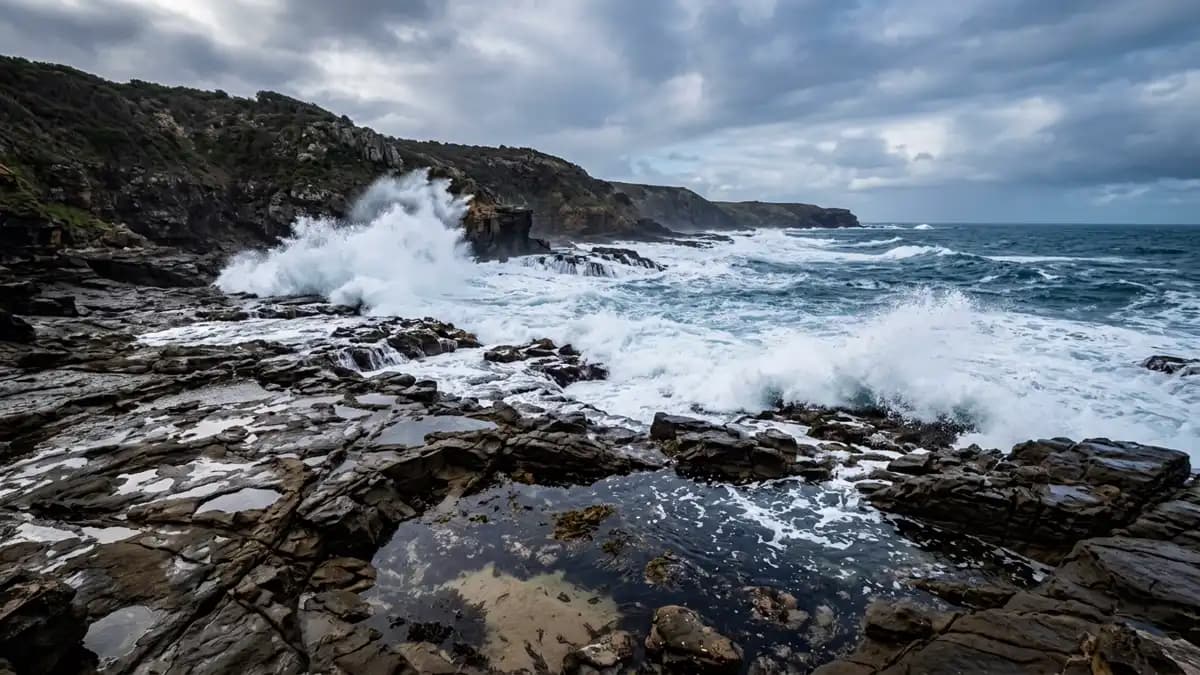
World-significant palaeontology site. 126 million year old polar dinosaur fossils. 1.5km coastal walk from main beach. Protected research area — look but don't touch.
Rock Pooling
Incredible rock platforms with diverse marine life. Anemones, crabs, starfish, and small fish at low tide. Between main beach and Flat Rocks. Allow 1-2 hours to explore properly.
Surfing
Consistent beach break at the main beach. Less crowded than Phillip Island or Peninsula surf spots. Intermediate level. Patrolled in summer. Bay Beach for beginners.
Coastal Walking Track
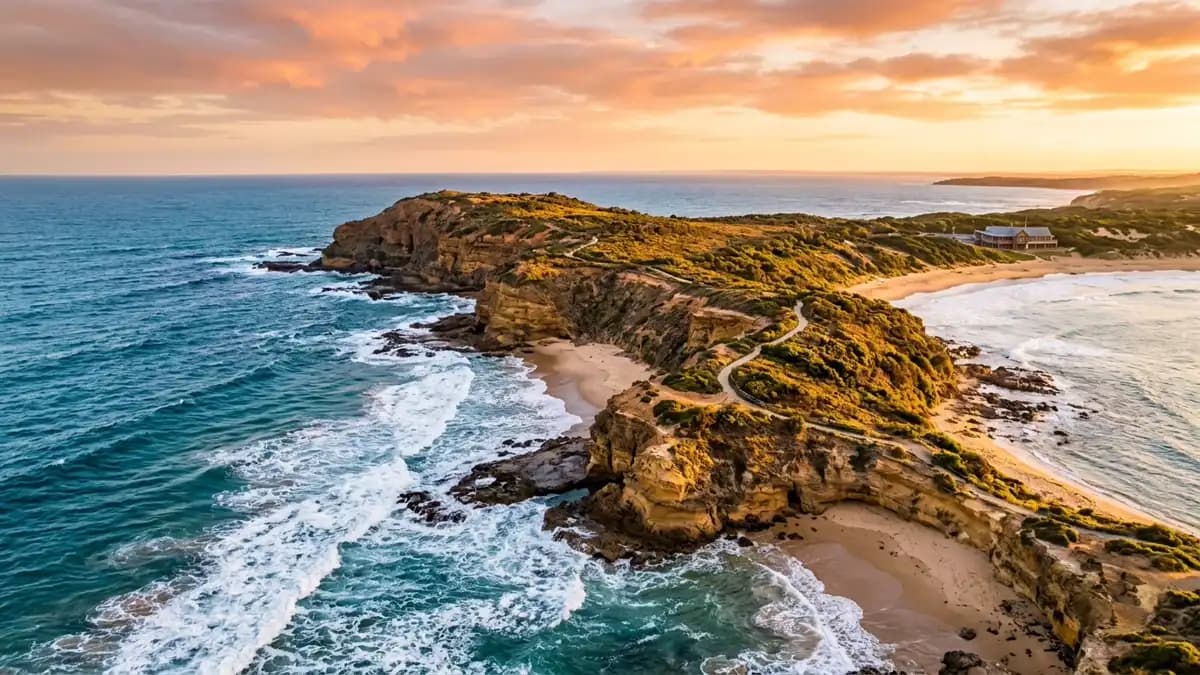
Walk east along the coast toward Inverloch. Dramatic rocky coastline, sea caves, and cliff views. The George Bass Coastal Walk passes through. Variable distances.
Bay Beach (Families)
Sheltered beach with calm water for young swimmers. Rock pools at the edges. Quieter than main beach. The family-friendly option on warm days.
Snorkelling
Clear water over the rock platforms in calm conditions. Marine life is abundant. Best in summer when water is clearest. Enter from the beach, explore the reef edges.
Cape Paterson Eco-Village
Australia's first zero-carbon housing estate. Energy-efficient homes with solar, batteries, and sustainable design. Guided tours available by arrangement.
Wonthaggi Desalination Plant Tour
Victoria's desalination plant is nearby. Free public tours explain how seawater becomes drinking water. Educational and surprisingly interesting. Book ahead.
Where to Stay in Cape Paterson
Mostly holiday rentals and a caravan park. A quiet alternative to busier Bass Coast towns. Book ahead for summer holidays and long weekends. Combine with Inverloch (15 min) for more dining options.
Cape Paterson Village
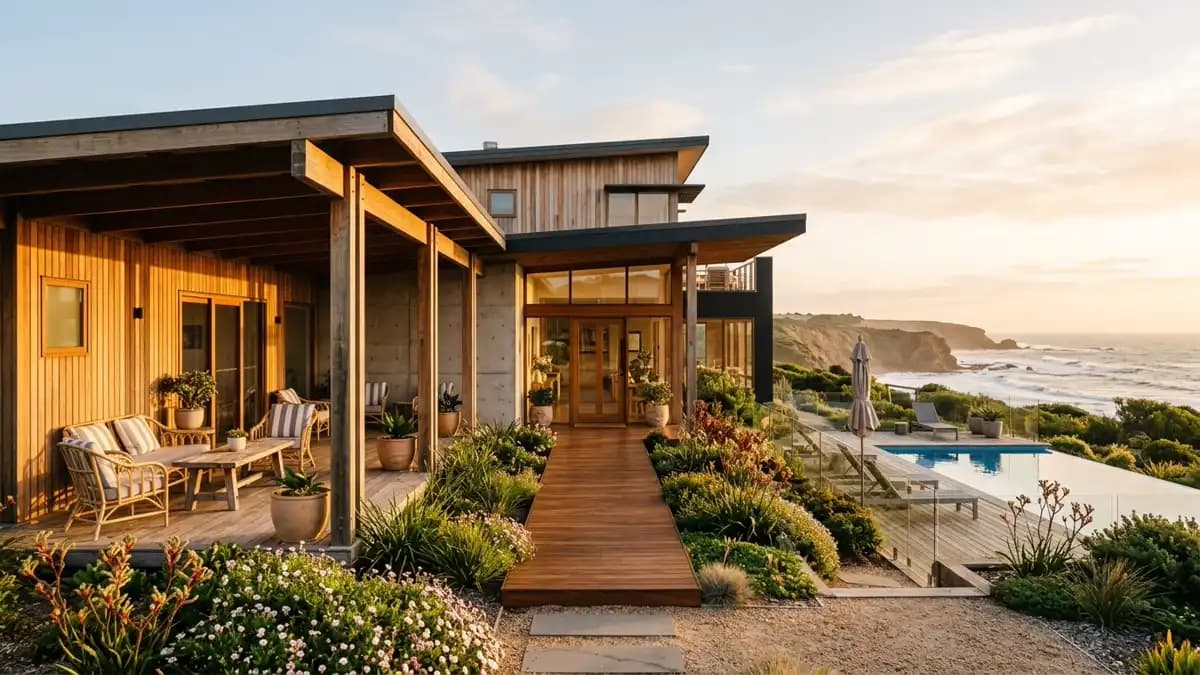
Holiday rentals, beach houses, and the caravan park. Walk to the beach. Self-contained with private bathrooms. Quiet residential atmosphere — no nightlife.
Nearest public dunny: Cape Paterson Beach or Lions Park (both within 5 min walk).
Inverloch (15 min)
Larger beach town with more accommodation, restaurants, and shops. Holiday parks, motels, and rentals. More services but still quiet compared to Phillip Island.
Nearest dunny: Inverloch facilities.
Wonthaggi (10 min)
The nearest town with supermarkets, fuel, and services. Motels and budget accommodation. Not beachside but practical as a base with easy access to Cape Paterson.
Nearest dunny: Wonthaggi facilities.
Tide & Rock Pool Guide
Rock pooling and fossil exploring at Cape Paterson is tide-dependent. Here's what's accessible at different tide levels.
| Tide Level | Rock Pools | Flat Rocks Access | Marine Life | Safety |
|---|---|---|---|---|
| Low tide | Fully exposed | Best access | Anemones, crabs, starfish, small fish | Safest — platforms fully exposed |
| Mid tide | Partially exposed | Limited | Deeper pools, fish, crabs | Watch for waves washing over platforms |
| High tide | Submerged | Not accessible | Snorkelling only (calm days) | Dangerous — surge and waves on rocks |
Check tide times at Bureau of Meteorology (bom.gov.au) before visiting. Best rock pooling is 1-2 hours either side of low tide. Wear sturdy shoes on rock platforms — surfaces are uneven, sharp, and slippery with algae. Never turn your back on the ocean.
Getting to Cape Paterson
From Melbourne (1hr 45min)
Take the M1 Monash Freeway and South Gippsland Highway, or via M1 and Bass Highway through Wonthaggi. About 140km. The Bass Highway route is slightly faster. Sealed roads throughout.
Alternative scenic route via Phillip Island and San Remo — longer but coastal.
From Phillip Island (40 min)
Via San Remo and the Bass Highway to Wonthaggi, then south to Cape Paterson. A natural addition to a Phillip Island trip — especially if you want a quieter beach away from the tourist crowds.
No Shops in Cape Paterson
Cape Paterson has no supermarket, no fuel, and very limited food options. Stock up in Wonthaggi (10 min) before coming. There's a small general store/cafe but don't rely on it.
Last toilet before Cape Paterson: Wonthaggi town centre (10 min). From Inverloch direction: 15 minutes.
Frequently Asked Questions
Are there public toilets at Cape Paterson Beach?
Yes. There are public toilets at the main Cape Paterson Beach car park near the surf lifesaving club. These are the best-maintained facilities in the area, with accessible options. Open year-round.
Where are the dinosaur fossils at Cape Paterson?
The dinosaur fossil site is at Flat Rocks, accessible via the coastal walking track east of Cape Paterson Beach. 126 million year old fossils were discovered here — it's a world-significant palaeontology site. The nearest toilet is at the main Cape Paterson Beach car park before you start the coastal walk.
Is there a toilet at Bay Beach?
Yes. Bay Beach (also called First Surf Beach) has public toilet facilities. Bay Beach is more sheltered than the main surf beach and popular with families. The toilet block is near the car park.
Are there accessible toilets at Cape Paterson?
The main Cape Paterson Beach toilets have accessible facilities. Bay Beach and Lions Park facilities have limited accessibility. For the dinosaur fossil walk, the coastal track is uneven and not wheelchair accessible.
How far is Cape Paterson from Melbourne?
Cape Paterson is approximately 140km from Melbourne CBD, about 1 hour 45 minutes drive via the M1 and Bass Highway through Wonthaggi. It's on the Bass Coast between Inverloch and Wonthaggi.
Is Cape Paterson good for surfing?
Yes. Cape Paterson has several surf beaches. The main beach has a reliable beach break suitable for intermediate surfers. Bay Beach is smaller and more sheltered. The area picks up swell from Bass Strait. Patrolled in summer.
Are there rock pools at Cape Paterson?
Yes. The rock platforms east of the main beach have excellent rock pools at low tide. Marine life includes anemones, crabs, starfish, and small fish. This is also the area where dinosaur fossils were found. Best explored at low tide — check tide times before visiting.
Cape Paterson Eco-Village
Australia's first zero-carbon housing estate is right here in Cape Paterson. A model for sustainable coastal living.
The Cape Paterson Eco-Village is a residential development where every home is designed to produce more energy than it consumes. Features include:
- All-electric homes with rooftop solar and battery storage
- Passive design — orientation, insulation, and thermal mass eliminate heating/cooling bills
- Shared community spaces, vegetable gardens, and walking paths
- Water-sensitive design capturing and reusing all rainwater
Guided tours available by arrangement — check the Cape development website. Not open for casual walk-throughs as it's a residential area.
Nearby Areas
Cape Paterson is a coastal village on the Bass Coast, population approximately 700. Known for the Flat Rocks dinosaur fossil site (126 million years old, world-significant), rock pooling, surf beach, and the Cape Paterson Eco-Village (Australia's first zero-carbon housing). Bunurong country.
Bass Coast Beach Circuit
Combine Cape Paterson with nearby Bass Coast beaches:
- Melbourne → Phillip Island (1.5hr) → San Remo (5min) → Kilcunda (15min) → Wonthaggi (15min) → Cape Paterson (10min) → Inverloch (15min)
All towns have public toilet facilities. The Bass Coast offers quieter beaches than the Mornington Peninsula with better surf.